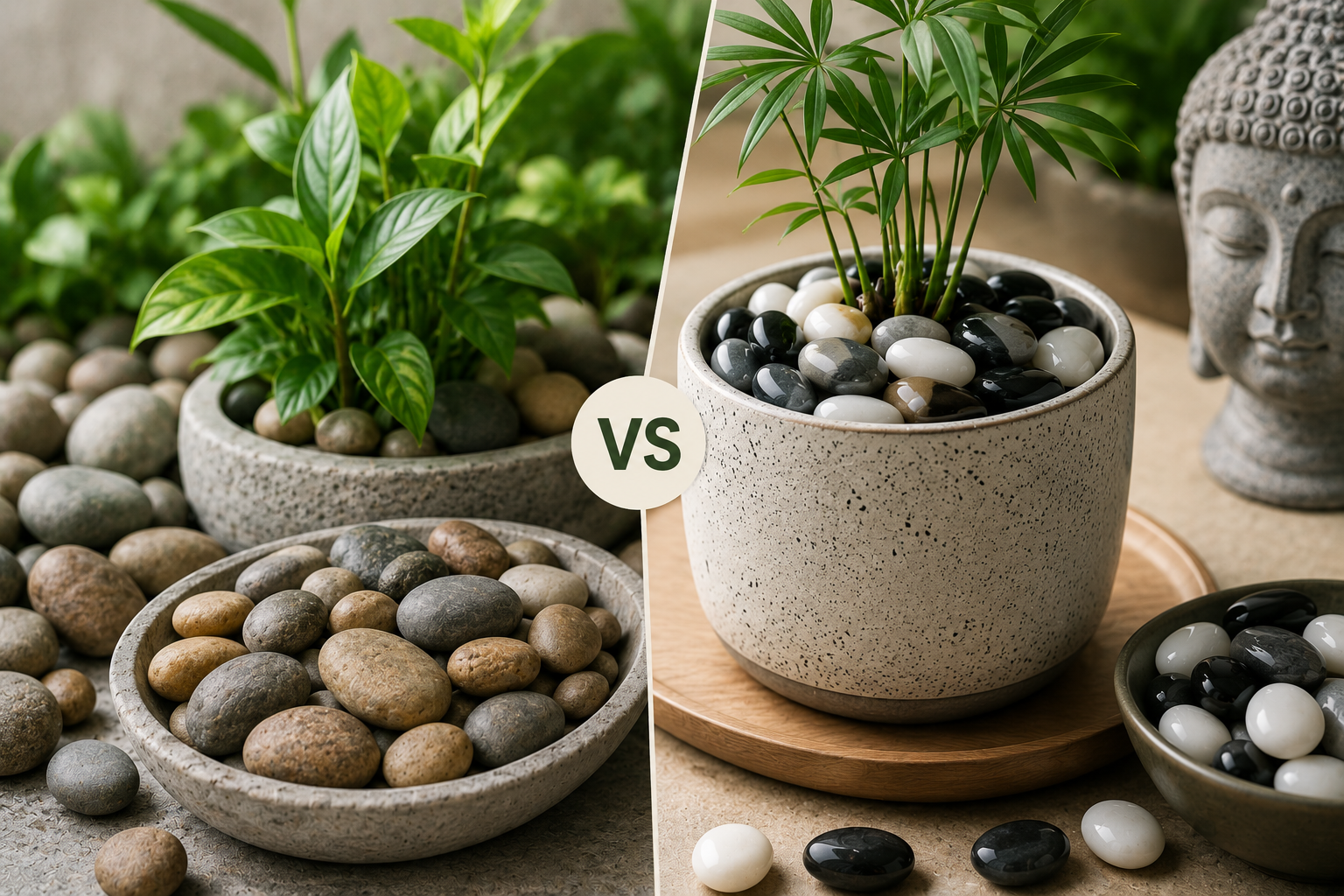
Pebbles look simple from a distance. Pick up a handful and you start noticing the differences — some are softly matte and earthy, others gleam like wet stones after rain. That single choice between river pebbles vs polished pebbles can completely change the mood of a garden bed, a planter, a centrepiece or a fountain.
If you have ever stood in front of two pebble bags wondering which one belongs in your space, this guide is for you. We will walk through how each type is made, where it shines (sometimes literally), where it falls flat, and how to match the right pebble to the right corner of your home or garden.
At Floramine, we work with both finishes every day across floral arrangements, planter styling and decor projects, and the right pick almost always comes down to four things: light, use, climate and the feeling you want the space to evoke.
What Are River Pebbles?
River pebbles are exactly what the name suggests — stones shaped by years of moving water. As they travel downstream, friction with sand, water and other stones slowly rounds their edges and softens their surface. The result is a smooth, naturally tumbled stone with a quiet, matte finish.
Key characteristics of natural river pebbles:
- Earthy colour palette — greys, browns, beige, soft whites, mixed tones
- Matte, lightly textured surface
- Rounded but irregular shapes
- Sourced directly from rivers and streams
- No chemical coating or artificial polish
Because they are untouched after collection (apart from washing and sorting), river pebbles feel grounded and organic. They blend into a landscape rather than dominate it, which is why landscape designers reach for them when the goal is calm, natural and timeless.
What Are Polished Pebbles?
Polished pebbles start their life similar to river pebbles, but go through one extra step: tumbling. Stones are placed inside a large rotating drum with abrasive grit and tumbled for hours — sometimes days — until the surface becomes glossy and reflective. Premium polished pebbles are then sealed with a fine layer of paraffin wax or resin to lock in shine.
Key characteristics of polished pebbles:
- High-gloss, mirror-like surface
- Deep, intensified colours (especially blacks, whites and onyx tones)
- Uniform, sleek appearance
- Wax or resin coating that enhances colour
- Reflects light beautifully indoors
Polished pebbles photograph well, style well in vases and elevate any indoor floral arrangement instantly. When you see a striking black-stone bowl beside a candle or a glossy white pebble bed beneath a fiddle-leaf fig, you are looking at polished pebbles doing their job.
River Pebbles vs Polished Pebbles: Quick Comparison Table
|
Feature |
River Pebbles (Natural) |
Polished Pebbles |
|
Finish |
Matte, soft |
Glossy, reflective |
|
Look |
Earthy, rustic |
Premium, modern |
|
Processing |
Naturally tumbled by water |
Machine-tumbled, wax/resin coated |
|
Best For |
Outdoor landscaping, pathways, water features |
Indoor decor, vases, floral arrangements |
|
Durability Outdoors |
Excellent, weather-proof |
May fade in direct sun over time |
|
Price |
More affordable |
Premium pricing |
|
Maintenance |
Rinse occasionally |
Reseal every 1–2 years for shine |
|
Mood |
Calm, grounded, organic |
Elegant, luxurious, polished |
|
Pet/Aquarium Safety |
Generally safe |
Check coating before aquarium use |
How Are River Pebbles and Polished Pebbles Made?
Understanding the process explains the price tag and the look.
Natural river pebble formation
River pebbles form over decades, even centuries. Water carries small rocks downstream, where they collide gently with sand and other stones. This natural friction smooths sharp edges and produces the soft, rounded shapes we recognise. Each pebble is a tiny geological story — no two are identical.
Polished pebble processing
The tumbling process is mechanical and much faster. Workers load stones into industrial tumblers with grit and water, then run the drums until surfaces grind smooth. Many manufacturers finish premium polished pebbles with a thin wax or resin coating to deepen colour and add shine. This step is what makes black polished pebbles look almost wet, even when dry.
Appearance and Style: Which Look Suits Your Space?
This is usually the deciding factor.
Choose river pebbles if your space leans toward:
- Cottage gardens, rustic terraces, zen corners
- Rock gardens and dry creek beds
- Pathways and stepping-stone borders
- Natural-look planters with succulents or bonsai
- Earthy outdoor weddings and event setups
Choose polished pebbles if your space leans toward:
- Modern, minimalist interiors
- Floral centrepieces and vase fillers
- Glossy black-and-white themed decor
- Indoor planters in living rooms and lobbies
- Premium gifting hampers and luxury arrangements
A practical test: stand in the room or garden where the pebbles will live and look at the other materials. Lots of wood, terracotta, jute and greenery? River pebbles. Lots of glass, ceramic, metallic accents or moody lighting? Polished pebbles.
Durability and Outdoor Performance
River pebbles win this round comfortably.
Because natural pebbles have no coating, there is nothing to fade, peel or dull. They handle monsoon, harsh summer sun and winter chill without changing colour or texture. This makes them the safer pick for outdoor landscaping, driveways, pathways and water features.
Polished pebbles can struggle outdoors, especially in tropical climates. UV exposure gradually breaks down the wax or resin coating, which can cause the shine to fade and dark colours like black or deep brown to look matte over time. In hot Indian summers, polished black pebbles can also absorb significant heat.
Quick rule of thumb:
- Indoors → polished pebbles thrive
- Outdoors with shade → either works
- Outdoors in direct sun → river pebbles last longer
Cost Comparison
Polished pebbles cost more, and there are clear reasons why:
- More labour-intensive tumbling
- Wax or resin sealing
- Tighter sorting by colour and size
- Higher visual yield (uniform stones look more premium)
In India, natural river pebbles typically retail at a fraction of the price of polished varieties. For a large garden bed or driveway border, the difference adds up significantly. For a small vase, centrepiece or indoor planter, the polished upgrade is often worth it — the visual payoff is immediate.
If budget matters but you still want that polished look in one corner, a smart move is to use river pebbles for bulk areas and polished pebbles as accent pieces — around candles, near a focal planter, or layered on top of a floral arrangement.
Best Uses for River Pebbles
- Garden pathways — they stay put, drain well and feel natural underfoot
- Dry creek beds and rain gardens — they mimic actual riverbed aesthetics
- Mulch top layer — they trap moisture and slow evaporation in planters
- Water features and fountains — they look authentic and don't shed coating
- Outdoor pots with succulents, cacti, money plants — the matte finish complements green tones
- Pet-friendly landscapes — no chemical coating to worry about
Best Uses for Polished Pebbles
- Indoor vase fillers — anchor stems in glass vases and elevate the entire arrangement
- Floral centrepieces — pair beautifully with fresh blooms and dried florals
- Candle styling and trays — reflect candlelight for that warm, luxurious glow
- Premium indoor planters — make even small succulents feel expensive
- Bathroom and spa decor — bring a wellness-retreat feel to a corner
- Gifting and event styling — bouquets, hampers, wedding tables, festive setups
This is where Floramine's collections really come into their own. Polished pebbles paired with fresh flowers, dried stems or preserved arrangements create the kind of finished, magazine-ready look that styled gifting and home decor calls for.
Maintenance: What Each One Needs
River pebbles are practically maintenance-free. A rinse with plain water once in a while, especially after monsoon dust settles, is enough.
Polished pebbles need slightly more care to keep that shine:
- Wipe with a soft damp cloth, not abrasive scrubbers
- Avoid harsh chemicals and acidic cleaners
- Reseal with a stone sealer every 1–2 years if used outdoors
- Keep away from prolonged direct sunlight where possible
If you are using polished pebbles in an aquarium, always check whether the resin coating is aquarium-safe — natural, uncoated polished marble or quartz is usually a better fit for fish tanks.
Common Mistakes to Avoid
- Using polished black pebbles in full-sun outdoor beds — they can fade and overheat
- Pairing busy polished mixes with already-busy interiors — visual clutter
- Skipping a base layer — both types perform better over landscape fabric outdoors
- Buying without checking size — 8mm, 20mm and 40mm pebbles look completely different in scale
- Ignoring the coating question for aquariums and pet zones — always confirm safety
How to Pair Pebbles with Flowers and Plants
A few quick styling tips from our floral team:
- White polished pebbles + white flowers = clean, fresh, wedding-ready
- Black polished pebbles + tropical greens = bold, modern, lounge-feel
- Mixed river pebbles + succulents = grounded, organic, easy-going
- Onyx pebbles + dried florals = moody, premium, sculptural
- Pale river pebbles + bonsai = traditional, calming, zen-inspired
The thumb rule: let the pebble support the flower, not compete with it. If your blooms are bold and colourful, lean toward neutral pebbles. If your blooms are soft and pastel, polished pebbles can add the dramatic contrast.
Conclusion
When it comes to river pebbles vs polished pebbles, there is no universal winner — there is only the right pebble for the right space. Natural river pebbles bring calm, earthy character and outdoor durability. Polished pebbles bring shine, drama and a premium finish that elevates floral arrangements and indoor decor instantly.
The smartest approach for most homes? Use both. Let river pebbles do the heavy lifting outdoors and in larger planters, and let polished pebbles handle the moments where you want a space to feel a little more elevated, a little more "wow".
FAQ: River Pebbles vs Polished Pebbles
Q1. What is the main difference between river pebbles and polished pebbles? River pebbles are naturally smoothed by flowing water and have a matte, earthy finish. Polished pebbles are machine-tumbled and usually coated with wax or resin to create a glossy, reflective surface.
Q2. Which is better for indoor plant pots — river or polished pebbles? For indoor decor, polished pebbles are usually the better pick because they reflect light and feel more premium. River pebbles work well too if you want a natural, organic look.
Q3. Do polished pebbles fade over time? Yes, when exposed to direct sunlight for long periods, the wax or resin coating can dull. Indoors or in shaded areas, polished pebbles hold their shine for years.
Q4. Are polished pebbles safe for aquariums? Some are, some aren't. Always check whether the coating is aquarium-safe. Natural river pebbles or uncoated polished marble are generally safer for fish tanks.
Q5. Which pebbles last longer outdoors in Indian weather? Natural river pebbles. They have no coating to break down under sun, rain or heat, so they handle Indian climate better in the long run.
Q6. Are river pebbles cheaper than polished pebbles? Yes, typically river pebbles cost less because they skip the tumbling, polishing and sealing steps that polished pebbles go through.
Q7. Can I mix river pebbles and polished pebbles in the same space? Absolutely — and it often looks stunning. Use river pebbles for large areas and polished pebbles as accents around focal points, planters or floral arrangements.
Q8. What size pebbles should I choose for a planter? For small indoor pots, 8–20 mm works best. For large floor planters, 25–40 mm gives better proportion. For outdoor borders, 40 mm and above looks well-scaled.