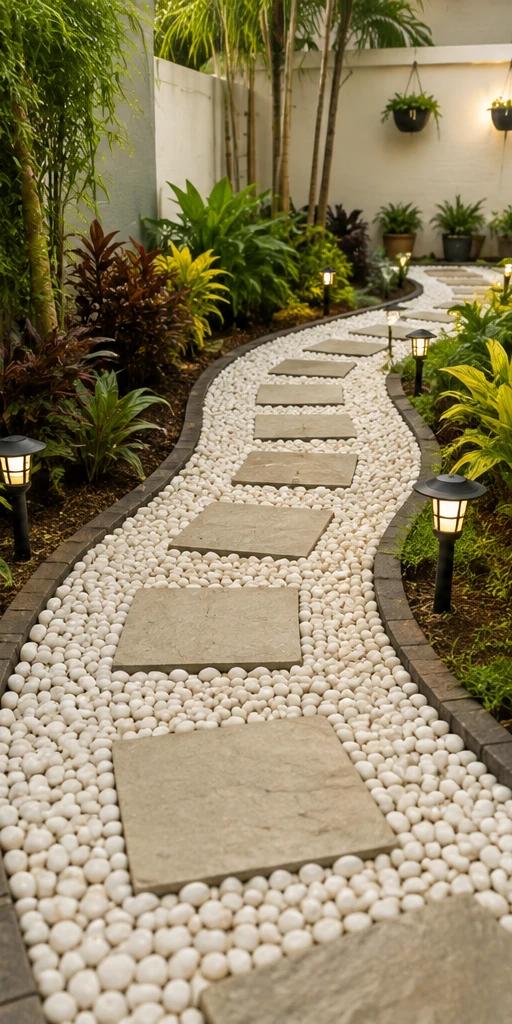
A pathway is the quietest, most useful piece of hardscape in a home garden. It tells you where to walk, protects the lawn, connects your gate to your porch, and, when chosen well, holds the entire garden together visually. In Tamil Nadu, where gardens face monsoon rain, coastal humidity, hot summers and heavy foot traffic during festival gatherings, the stone under your feet has to work hard.
The good news is that Tamil Nadu sits on some of the most beautiful and durable natural stone in India. Kadapa. Granite. Tandur. Kota. Red sandstone. And, of course, river pebbles from the Cauvery and its tributaries. You have world-class options right on your doorstep, usually at a fraction of what imported stones would cost.
This guide walks through the pathway stones most commonly available in Tamil Nadu, how they compare, what they cost, where each one belongs, and how to buy smart. Whether you are laying a five-foot backyard walkway in Chennai, a winding garden path in Coimbatore, or a proper entrance pathway in Madurai, this guide is built for you.
At Floramine, we work with homeowners and landscape stylists across Tamil Nadu on garden and pathway projects, and the recommendations here reflect what we actually see working in real homes.
Why Pathway Stone Choice Matters More in Tamil Nadu
Before the shortlist, a quick word on the local conditions that should shape your choice.
Monsoon rainfall: Chennai, Coimbatore and coastal districts receive heavy rain twice a year (southwest and northeast monsoons). Porous or poorly-set stones develop moss, algae and slip risk within one season.
Coastal humidity: In Chennai, Cuddalore, Nagapattinam and other coastal areas, salt-laden air slowly damages softer stones. Denser stones like granite and Kadapa last longer.
Summer heat: May and June regularly cross 40°C in inland Tamil Nadu. Dark stones absorb heat and become uncomfortable to walk on barefoot.
Festival foot traffic: Homes host large gatherings during Pongal, Diwali, weddings and family visits. Pathways must handle sudden heavy use without shifting or cracking.
Local sourcing: Kadapa (from Andhra), granite (from Tamil Nadu and Karnataka), Tandur (Telangana) and river pebbles (Cauvery) are all available within short logistics distances. This lowers cost and simplifies replacement over time.
Match the stone to these realities, and your pathway will last decades. Ignore them, and you'll be repairing or replacing within 2 to 3 years.
The 6 Best Pathway Stones for Tamil Nadu Home Gardens
- Kadapa Stone (Cuddapah Black Limestone)
Kadapa is the workhorse of South Indian home construction, and one of the most popular pathway stones in Tamil Nadu for good reason.
Sourced from the Kadapa (Cuddapah) region of neighbouring Andhra Pradesh, this dense black limestone is naturally durable, water-resistant and available in large flat slabs perfect for pathway laying.
Best for: Main garden pathways, front entrance walkways, courtyards, temple approach paths
Look: Rich charcoal to black, matte or lightly polished finish, elegant and grounding
Pros:
- Extremely durable, easily lasts 20+ years
- Handles monsoon and heavy rain without damage
- Low maintenance, just occasional rinse
- Naturally slip-resistant when honed (unpolished) finish is chosen
- Widely available across Tamil Nadu
Cons:
- Absorbs heat, uncomfortable barefoot on peak summer afternoons
- Polished finish becomes slippery when wet
- Requires proper base preparation for longevity
Approximate cost: Rs. 30 to Rs. 70 per square foot (raw slab), Rs. 90 to Rs. 150 per square foot (installed)
Floramine tip: Always specify honed (matte) finish for garden pathways, not polished. It looks more organic in a garden setting and stays safer during monsoon.
- Granite Slabs and Cobblestones
Tamil Nadu is one of India's largest granite producers, so this stone is both premium and locally abundant. Granite is the gold standard for pathways that need to look elegant, last forever and handle any weather.
Best for: Formal entrance paths, courtyard walkways, high-traffic garden approaches, driveways
Look: Grey, black, pink, green, or salt-and-pepper finishes; flamed, honed or polished; classic and premium
Pros:
- Nearly indestructible, 25+ years of life
- Handles heavy foot traffic and vehicle load
- Excellent slip resistance with flamed finish
- Doesn't fade in sun
- Coastal-humidity resistant
Cons:
- Higher upfront cost
- Requires professional installation
- Heavy, needs careful base preparation
- Dark granites absorb heat in summer
Approximate cost: Rs. 60 to Rs. 180 per square foot (raw slab), Rs. 150 to Rs. 300 per square foot (installed)
Floramine tip: For garden pathways, choose flamed-finish grey or black granite in stepping-stone format rather than a continuous slab. It reads as garden-friendly, not driveway-like.
- Tandur Stone (Grey Limestone)
Tandur stone comes from Telangana and is one of the most under-appreciated pathway stones in South India. It offers a beautiful, muted, natural look at a very reasonable price.
Best for: Informal garden paths, courtyard walkways, backyard and side-yard paths
Look: Soft grey with beige and cream veins, matte finish, calm and natural
Pros:
- Affordable
- Easy to cut and shape on site
- Beautiful natural finish suits garden aesthetics
- Cooler than dark stones in summer
- Widely available across Tamil Nadu
Cons:
- Softer than granite or Kadapa, may chip under heavy load
- Absorbs some water, needs sealing in monsoon-heavy zones
- Can develop moss in shaded, damp areas
Approximate cost: Rs. 25 to Rs. 55 per square foot (raw slab), Rs. 80 to Rs. 130 per square foot (installed)
Floramine tip: Tandur pairs beautifully with green foliage and terracotta planters. It's the ideal choice for gardens leaning toward a soft, organic, cottage feel.
- Red Sandstone (Jodhpur or Similar)
Red sandstone brings warmth and character that few other pathway stones can match. Though not native to Tamil Nadu, it's widely available in Chennai and Coimbatore stone markets and often used for feature garden pathways.
Best for: Feature pathways, entrance walks in traditional homes, temple-facing garden paths Look: Warm terracotta to deep rust red, textured finish, traditional and grounding Pros:
- Stunning warm colour that pairs with greenery
- Cooler than dark stones in summer heat
- Ages beautifully, taking on a rich patina
- Naturally slip-resistant
Cons:
- More porous than granite or Kadapa
- Needs sealing for monsoon protection
- Colour can fade slightly with prolonged direct sun over years
- Transport costs raise the price in Tamil Nadu
Approximate cost: Rs. 40 to Rs. 90 per square foot (raw slab), Rs. 110 to Rs. 180 per square foot (installed)
Floramine tip: Red sandstone works exceptionally well in gardens with terracotta planters, brass diyas and traditional Tamil home aesthetics.
- River Pebbles and Crushed Stone
For garden paths that lean natural, informal or budget-friendly, river pebbles are unbeatable. Tamil Nadu has excellent access to Cauvery river pebbles, ranging from tiny to fist-sized rounded stones.
Best for: Informal garden paths, transition zones between planted beds, low-traffic decorative pathways, dry creek beds, borders
Look: Natural greys, browns, whites, beige, matte finish, organic and calm
Pros:
- Very affordable
- Easy to install as a DIY project
- Excellent drainage during monsoon
- Softens the look of harder hardscape elements
- Easy to top up or replace over time
Cons:
- Not suitable for wheelchairs, strollers or heels
- Shifts underfoot if not properly edged
- May migrate into planting beds without borders
- Needs weeding periodically
Approximate cost: Rs. 8 to Rs. 25 per kg (loose pebbles), Rs. 40 to Rs. 90 per square foot (installed with edging and base fabric)
Floramine tip: Use river pebbles for meandering garden paths that link larger stepping stones. Add landscape fabric underneath to prevent weeds, and edge the path with larger stones or wooden planks to keep pebbles in place.
- Stepping-Stone Pavers (Concrete or Natural Stone)
Stepping-stone pavers are the most flexible pathway option. They can be laid straight, curved, close together, or spaced apart. Available in both natural stone (granite, Kadapa) and cement/concrete, they suit almost every garden style.
Best for: Meandering garden paths, connecting garden zones, lawn walkways, spot-stepping through flower beds
Look: Round, square, rectangular or irregular; smooth or textured; from rustic to modern
Pros:
- Highly flexible in layout
- Easy to install
- Can be spaced to protect grass and plant beds
- Comes in every budget range
- Easy to replace individual stones
Cons:
- Cement pavers can look artificial in a natural garden
- Poor spacing makes them uncomfortable to walk on
- Individual stones can shift over time without proper base
Approximate cost: Rs. 40 to Rs. 250 per stone depending on size, stone type and finish
Floramine tip: Space stepping stones at 18 to 24 inches apart (measured centre to centre) for a comfortable natural walking rhythm. Fill the gaps between with river pebbles or ground cover plants for a softer look.
Quick Comparison Table: Pathway Stones in Tamil Nadu
|
Stone |
Best Use |
Durability |
Monsoon-Safe |
Cost (Installed) |
Aesthetic |
|
Kadapa |
Main pathway |
20+ years |
Excellent |
Rs. 90 to 150 / sq ft |
Elegant, grounding |
|
Granite |
Entrance, high-traffic |
25+ years |
Excellent |
Rs. 150 to 300 / sq ft |
Premium |
|
Tandur |
Informal garden |
15+ years |
Good with sealing |
Rs. 80 to 130 / sq ft |
Natural, soft |
|
Stone |
Best Use |
Durability |
Monsoon-Safe |
Cost (Installed) |
Aesthetic |
|
Red Sandstone |
Feature paths |
15 to 20 years |
Good with sealing |
Rs. 110 to 180 / sq ft |
Warm, traditional |
|
River Pebbles |
Decorative, low-traffic |
10+ years |
Excellent drainage |
Rs. 40 to 90 / sq ft |
Organic, calm |
|
Stepping Stones |
Meandering paths |
10 to 25 years |
Varies |
Rs. 40 to 250 / stone |
Flexible |
Prices are indicative and vary by district, quantity ordered and finish. Always request 3 quotes before finalising.
How to Choose the Right Pathway Stone for Your Home
Ask yourself these five questions, in order:
- What is the pathway's purpose? An entrance path needs strength and elegance (granite, Kadapa). A meandering garden path prioritises aesthetics (Tandur, river pebbles). A side-yard access path prioritises affordability (Tandur, cement pavers).
- How much foot traffic will it get? High traffic (front entrance, festival gatherings) demands granite or Kadapa. Low traffic (backyard, side garden) allows pebbles, Tandur or stepping stones.
- How much sun does the pathway get? Full sun in Tamil Nadu means summer heat absorption. Choose lighter stones (Tandur, sandstone) or shaded pathways for dark granite and Kadapa.
- How exposed is it to monsoon rain? Fully exposed paths need dense, non-porous stones (Kadapa, granite) or excellent drainage (pebbles with base fabric).
- What's your budget per square foot? Rs. 40 to 90 range: river pebbles, cement pavers. Rs. 80 to 150: Tandur, Kadapa. Rs. 150+: granite, high-end sandstone or Kadapa with detailed finishing.
Match all five answers and your shortlist narrows to one or two stones.
Base Preparation: The Step Most Homeowners Get Wrong
The pathway stone gets all the attention. The base underneath decides how long that stone will last. A proper Tamil Nadu garden pathway base looks like this:
- Excavate 6 to 8 inches deep across the path width
- Add a compacted layer of larger stones or brick pieces (4 inches)
- Add a layer of coarse sand or crusher dust (2 inches), levelled
- Add landscape fabric to block weeds
- Lay your pathway stones with even spacing
- Fill gaps with sand, gravel, pebbles or ground cover
- Compact and settle with light watering over 48 hours
Skipping the base is the number one reason garden pathways fail within two years. In monsoon-heavy Tamil Nadu districts, a shallow, badly-drained base leads to shifting stones, cracked joints and constant repair.
If you're hiring a mason, ask them specifically to walk you through the base preparation before starting. If they can't, hire someone else.
Vastu and Aesthetic Considerations for Pathway Placement
For homeowners who consider Vastu, a few common principles apply to garden pathways: • The main pathway ideally enters from the north or east for prosperity and positive energy • Circular or straight paths are preferred over sharp, angular paths with harsh turns • Avoid pathways directly aligned with the main door in a straight, uninterrupted line • Keep pathways clear and unblocked at all times, no plant pots or objects in the middle
- Odd-numbered stepping stones (5, 7, 9) are considered auspicious in many South Indian traditions
Beyond Vastu, aesthetic principles that always work:
- Match the pathway to the home's architecture. Traditional Tamil homes suit warm sandstone or Kadapa. Modern homes suit granite or clean-cut Tandur.
- Curve rather than straighten. Curved paths feel garden-like; straight paths feel driveway-like. • Edge the path with plants, ground cover or river pebbles for softness.
- Don't over-decorate. One dominant pathway stone with one secondary material (pebbles, ground cover) is enough.
DIY or Hire a Mason? A Tamil Nadu Perspective
You can DIY the following:
- River pebble paths with landscape fabric
- Simple stepping-stone paths with individual pavers
- Small backyard or side-garden paths
You should hire a professional for:
- Main entrance pathways
- Full granite or Kadapa slab pathways
- Sloped or drainage-critical sites
- Anything longer than 15 to 20 feet
For professional installation in Tamil Nadu, expect to pay Rs. 40 to 100 per square foot in labour, on top of stone material cost. Chennai, Coimbatore and Bengaluru have the largest supply of experienced landscape masons; smaller towns require a bit more search.
Ask for references. Ask to see previous work. Ask about warranty on the installation. A good pathway should come with at least a 1-year workmanship warranty.
Common Pathway Mistakes to Avoid
- Choosing polished stone for outdoor use (slippery in rain)
- Skipping landscape fabric (weeds and grass push through within months)
- Not accounting for slope and drainage (water pools, stones shift)
- Using undersized stepping stones (comfortable stepping stones are at least 18 inches wide) • Mixing too many stone types in one pathway (looks cluttered)
- Placing dark stones under full west sun (heat becomes uncomfortable in May) • Ignoring the transition to lawn or planting beds (path edges look unfinished) • DIY-ing a large or high-traffic path without proper base tools (fails within 1 to 2 years)
Maintenance Tips for Tamil Nadu Pathways
- Sweep weekly to prevent leaf and soil build-up
- Rinse with plain water once a month during dry months
- Rinse thoroughly after monsoon to clear algae and mud stains
- Reseal porous stones (Tandur, sandstone) every 2 to 3 years
- Re-level any shifted stones at the end of each monsoon
- Top up river pebble paths every 12 to 18 months as pebbles settle or migrate • Trim overhanging plants that drop leaves or fruit onto the pathway
- Check joint filling annually and refill with sand or gravel as needed
A well-maintained pathway in Tamil Nadu can easily last 20 years with minimal cost. A neglected one starts failing within 3.
FAQ: Pathway Stones for Tamil Nadu Home Gardens
Q1. Which is the most affordable pathway stone in Tamil Nadu?
River pebbles are the most affordable, at Rs. 8 to 25 per kg. For solid paving, Tandur stone at Rs. 25 to 55 per square foot (raw) is the cheapest durable option.
Q2. Is Kadapa stone good for garden pathways in Chennai?
Yes, Kadapa is one of the best choices for Chennai. It handles monsoon rain, coastal humidity and heavy foot traffic without issues. Choose honed (matte) finish for outdoor safety.
Q3. Which pathway stone stays cool in Tamil Nadu summer?
Tandur (light grey), red sandstone (warm but not as heat-absorbing as dark stone) and river pebbles stay cooler than granite or Kadapa. If barefoot walking matters, avoid dark stones in full west sun.
Q4. How do I stop moss growth on my pathway during monsoon?
Ensure good drainage (correct slope, base gravel), rinse regularly, avoid deep shade if possible, and use a diluted vinegar-water solution once every 2 months during peak monsoon.
Q5. Do I need landscape fabric under my pathway stones?
Yes, almost always. Landscape fabric prevents weeds from growing through the joints and stops soil migration. It's a small cost (Rs. 15 to 30 per square foot) that adds years of life to your pathway.
Q6. What's the minimum pathway width for a home garden?
36 inches (3 feet) is standard for a single-person walkway. 48 inches (4 feet) allows two people to walk side by side, which is ideal for entrance paths in Tamil Nadu homes that host regular family gatherings.
Q7. Can I mix different stones in one pathway?
Yes, but sparingly. Use one dominant stone (e.g. Kadapa) and one secondary material (e.g. river pebbles as joint filler). Mixing more than two types starts looking cluttered.
Q8. How long does a Tamil Nadu pathway installation take?
A 20-foot pathway with proper base preparation typically takes 3 to 5 days for a small mason team. Rushing this timeline usually compromises the base and shortens the pathway's life.
Q9. Which pathway stone works best for coastal Tamil Nadu (Chennai, Nagapattinam)?
Granite and Kadapa stone are the best coastal-friendly options. Their density resists salt-laden air and monsoon rain better than porous stones like sandstone or Tandur.
Q10. How do I choose stone colours that match my home?
Look at your home's exterior wall colour, roof colour and window frames. Warm-toned homes (beige, terracotta) suit red sandstone or Tandur. Cool-toned homes (white, grey) suit Kadapa or grey granite. Avoid strong colour contrasts.
Conclusion
A garden pathway is more than a walking surface. It's the visual line that connects every element of your outdoor space, and in Tamil Nadu, it's a decision that has to survive monsoon, summer, coastal air and years of family footfall.
The good news is that the right stone is almost always locally available, affordable relative to what you get, and rewarding for decades. Kadapa for elegance and durability. Granite for premium longevity. Tandur for warmth and softness. Red sandstone for traditional character. River pebbles for organic ease. Stepping-stones for flexibility.
Match the stone to your home, your climate, your budget and your usage patterns, and the pathway you build now will be one of the best long-term investments you make in your home garden.
Take your time. Ask for samples. Look at them in sunlight and after rain before you decide. And prepare the base as carefully as you choose the stone. That's the difference between a pathway that lasts 5 years and one that lasts 25.