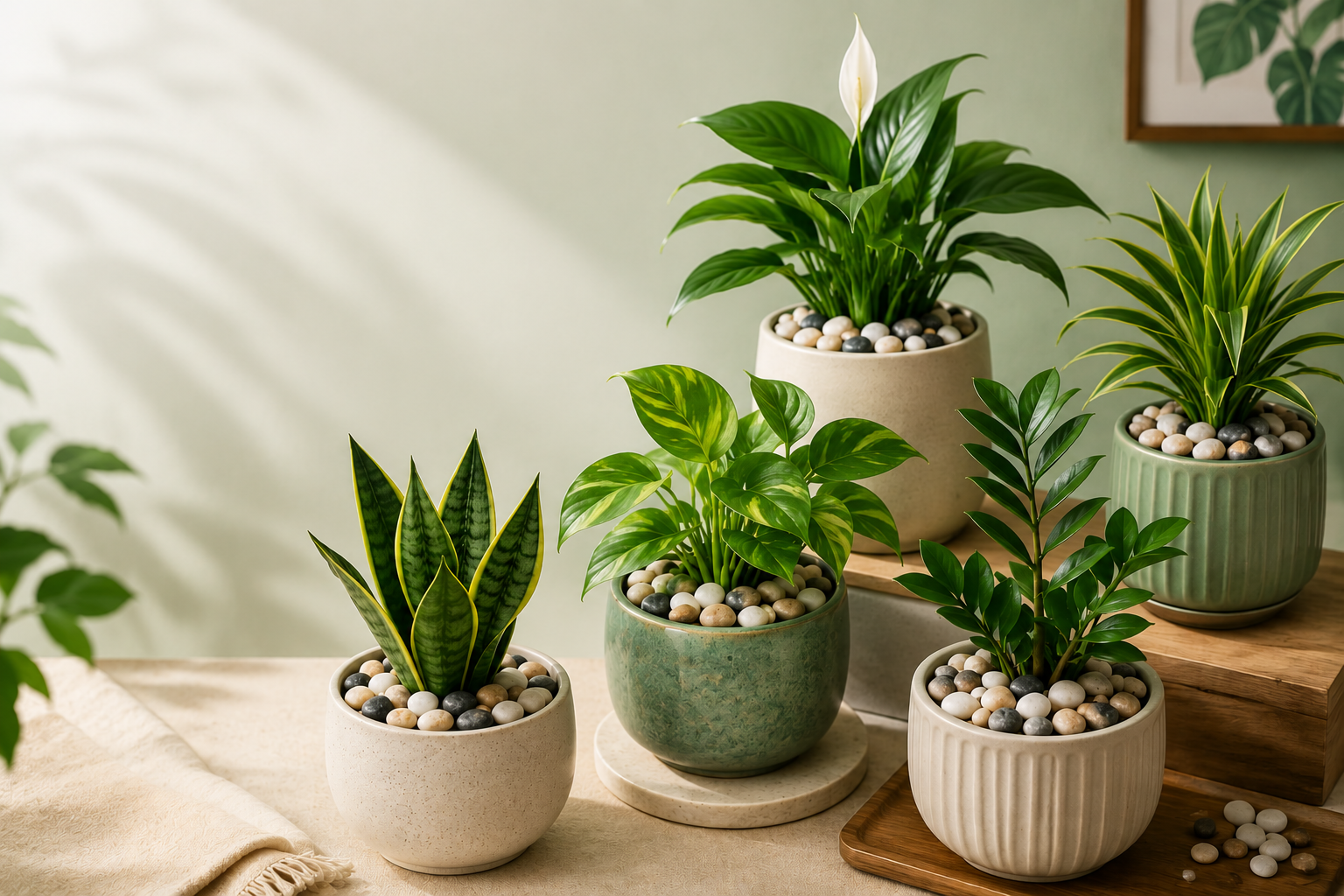
There is a quiet shift happening in Indian homes. The corner that used to hold a plain potted plant now holds a styled one. Pebbles on top, a beautiful ceramic planter underneath, and a single plant chosen for the way it catches light. It looks effortless. It usually isn't.
The good news: it can be.
Pebble topdressing, the layer of decorative stones placed over the soil, is the simplest styling upgrade in the indoor plant world. It hides bare soil, slows evaporation, keeps fungus gnats out, and turns even the most ordinary plant into a magazine-worthy object. But it only works beautifully when the plant behind the pebbles is the right kind of plant.
You don't want a thirsty, fussy plant that pulls focus every other day. You want a plant that survives a missed watering, looks great year-round, and lets the pebbles do their styling job.
In this guide, we are sharing the five low-maintenance indoor plants that pair most beautifully with pebble topdressing. These are plants we use across Floramine's indoor styling and gifting collections, and plants that genuinely thrive in Indian homes.
Why Pebble Topdressing Works So Well Indoors
Before we get to the plants, a quick word on why this small detail matters.
Pebble topdressing is more than a styling choice. A one-inch layer of decorative pebbles on the soil surface gives you:
- Less watering, because the pebble layer slows surface evaporation
- Fewer pests, since fungus gnats cannot lay eggs in soil they cannot reach
- No soil splash, because water hits pebbles, not loose soil
- Stable temperature, with the layer insulating roots from sudden heat or AC drafts
- A premium, finished look that instantly elevates planter aesthetics
The trick is matching the right pebble to the right plant. White pebbles brighten low-light corners. Black polished pebbles add drama to bright spaces. Mixed earth-tone river pebbles add warmth to neutral interiors.
Now, the plants.
1. Snake Plant (Sansevieria): The Architectural One
If there is one plant that looks like it was designed to be photographed with pebbles, it's the Snake Plant.
Its tall, sword-like leaves rise vertically out of the pot, and a clean pebble layer at the base feels like a finished sculpture. The contrast between the deep green-and-yellow striped leaves and a layer of white polished pebbles is genuinely striking. Minimalist, modern, intentional.
Why it works so well with pebble topdressing:
- Vertical growth means the pebble surface stays visible
- The plant doesn't drop leaves or shed debris onto the pebbles
- It rarely needs watering, so pebbles don't get disturbed
- The thick base of each leaf creates clean lines against the stone texture
Care notes:
- Light: tolerates anything from low light to bright indirect
- Water: once every 2 to 3 weeks; less in monsoon and winter
- Soil: well-draining cactus or succulent mix
Best pebble pairing:
- White polished pebbles for a modern, gallery-clean look
- Black polished pebbles for a moody, premium, designer feel
- Mixed grey river pebbles for an understated, calm vibe
Floramine styling tip: Pair a tall snake plant in a matte black ceramic planter with white pebbles on top. Place it next to a neutral sofa or in an entryway. The contrast does all the work.
2. ZZ Plant (Zamioculcas zamiifolia): The Indestructible One
The ZZ plant is famous for one reason: it refuses to die. You can forget to water it, leave it in a dim corner, travel for a month, and it will still be standing there glossy and green when you return.
That same forgiving nature makes it ideal for pebble topdressing. Because you water it so rarely, the pebble layer stays clean and undisturbed for weeks at a time.
Why it works so well with pebble topdressing:
- Waxy, deeply glossy leaves reflect light beautifully
- The dark green pairs dramatically with both white and black pebbles
- Slow-growing, so the pot stays balanced and styled
- Rarely sheds, so pebbles stay pristine
Care notes:
- Light: low to bright indirect (one of the most low-light tolerant houseplants)
- Water: once every 2 to 3 weeks; let soil dry completely between waterings
- Soil: standard well-draining potting mix
Best pebble pairing:
- Black polished pebbles echo the dark, glossy leaves for an all-tonal look
- White marble chips give bright contrast, perfect for low-light corners
- Onyx or mixed dark pebbles add a moody, lounge-feel styling
Floramine styling tip: A ZZ plant in a cream or beige planter with black polished pebbles on top is a fail-safe centrepiece for living rooms, study corners, and reception areas.
3. Money Plant or Pothos (Epipremnum aureum): The Trailing One
The Money Plant is the houseplant most Indian homes already have, and most have it in a plain pot with bare soil. Add a pebble layer, and suddenly that same plant becomes a styled piece of decor.
Because the Money Plant trails downward, your eye travels along its vines and then lands on the pebble surface at the base. That base needs to look good. Pebbles make sure it does.
Why it works so well with pebble topdressing:
- Heart-shaped trailing leaves draw the eye to the pot
- Variegated yellow-green leaves pair beautifully with neutral pebble tones
- Hardy enough to handle slightly compacted topsoil from pebble weight
- Works in hanging planters, table pots and shelf displays
Care notes:
- Light: bright indirect (tolerates lower light with slower growth)
- Water: when the top inch of soil feels dry, typically weekly
- Soil: any standard potting mix
Best pebble pairing:
- White river pebbles for a clean, fresh look
- Pale earth-tone pebbles for warmth and balance
- Mixed pebbles for a rustic, organic feel
Avoid heavy black pebbles with money plants. The visual weight competes with the trailing vines instead of supporting them.
Floramine styling tip: Place a money plant in a small ceramic pot with pale river pebbles on top, then set it on a wall shelf where the vines can trail freely. The pebble layer keeps the pot looking finished even when viewed from below.
4. Jade and Other Succulents (Crassula ovata and friends): The Sculptural Ones
Succulents and pebble topdressing are practically made for each other. In their natural habitat, succulents grow in rocky, gritty soil. A pebble top layer simply replicates that environment beautifully and adds serious styling power.
Jade plant, Echeveria, Haworthia, Kalanchoe and string of pearls all fall in this category. Each one stays small, sculptural and quietly beautiful, with very little fuss.
Why they work so well with pebble topdressing:
- Pebbles match their natural growing environment
- Compact size means the entire pot reads as a styled object
- The pebble layer prevents leaves from sitting on damp soil and rotting
- Multiple succulents in one wide planter create a desert landscape look
Care notes:
- Light: bright direct to bright indirect (most succulents love sun)
- Water: every 10 to 15 days in summer, less in winter
- Soil: gritty cactus mix is essential
Best pebble pairing:
- Mixed pebbles (white, grey, beige) for a natural desert look
- Fine white pebbles for a clean, modern succulent display
- Black polished pebbles for one or two feature succulents in a minimalist pot
Floramine styling tip: Try a wide, shallow ceramic bowl with three to five different succulents and a mixed-pebble top layer. Add one larger feature stone for height variation. This single planter can sit on a coffee table, console or work desk and instantly elevate the space.
5. Peace Lily (Spathiphyllum): The Elegant One
The Peace Lily is the only plant on this list that actively flowers, and that one detail changes everything. When those tall, white spathes rise above the dark green leaves, you want the base of the planter to feel just as considered as the bloom. Pebbles do exactly that.
It is also one of the most popular NASA-listed air-purifying plants, which makes it a favourite for bedrooms, study rooms and meditation corners.
Why it works so well with pebble topdressing:
- White blooms echo white pebbles beautifully for a tonal styling story
- Glossy dark leaves contrast cleanly against any pebble colour
- Tolerates the moisture retention that pebble layers create
- Adds elegance and softness that the other four plants on this list don't
Care notes:
- Light: medium to bright indirect (avoid harsh direct sun)
- Water: weekly, or when leaves start to droop slightly
- Soil: rich, well-draining potting mix
Best pebble pairing:
- White polished pebbles to echo the bloom colour
- Pale grey river pebbles for a calm, neutral look
- Onyx or charcoal pebbles for dramatic contrast against the white flowers
A small note: Peace Lilies enjoy slightly higher humidity. A pebble tray placed under the planter (separate from the topdressing) works wonderfully in dry, AC-heavy rooms.
Floramine styling tip: A blooming Peace Lily in a white ceramic planter with white pebbles on top makes a stunning bedside or console arrangement. It feels like a hotel suite styling moment, achievable in your own home.
Quick Reference: Plant and Pebble Pairing Chart
|
Plant |
Best Pebble Colour |
Best Planter Style |
Watering Frequency |
|---|---|---|---|
|
Snake Plant |
White or black polished |
Matte ceramic, tall |
Every 2 to 3 weeks |
|
ZZ Plant |
Black polished or white marble |
Cream, beige or dark ceramic |
Every 2 to 3 weeks |
|
Money Plant |
White or earth-tone river |
Small ceramic, hanging pot |
Weekly |
|
Jade and Succulents |
Mixed or fine white |
Wide shallow bowl |
Every 10 to 15 days |
|
Peace Lily |
White polished or charcoal |
White ceramic, smooth finish |
Weekly |
How to Apply Pebble Topdressing Correctly
A few practical tips that make the difference between a styled look and a messy one:
- Rinse the pebbles first to wash off dust before they touch the soil
- Keep the layer to about one inch, since deeper layers can trap too much moisture
- Leave a small gap around the plant stem, so the base of the plant breathes
- Use 8 to 20 mm pebbles for most indoor plants; larger pebbles look out of scale
- Refresh the pebbles every 6 to 8 months with a quick rinse to bring back the shine
- Choose lighter pebbles for low-light rooms to bounce light around the corner
- Avoid painted or dyed pebbles for plants, since the colours can leach into the soil over time
Common Mistakes to Avoid
- Using a pebble layer over chronically waterlogged soil, which traps moisture and causes root rot
- Burying the stem under pebbles, which leads to stem rot
- Mixing too many pebble colours in one planter, which creates visual noise
- Overwatering after adding pebbles, since the layer already slows evaporation
- Skipping drainage holes in the planter, which makes the pebble layer worse, not better
How Pebble Topdressing Fits into Modern Indian Home Styling
Indian interiors today are moving toward a calmer, more curated aesthetic. Cream walls, wooden tones, ceramic finishes, brass accents and a few statement plants. In that visual language, a plain pot with exposed dark soil suddenly looks unfinished.
Pebble topdressing closes the loop. It signals intent. It tells the eye that the plant isn't just placed there, it has been styled there.
For gifting too, this small detail makes a big difference. A potted plant gifted with a beautiful pebble top layer feels finished and premium, the kind of gift that fits straight into a friend's living room or a colleague's work desk without needing any further effort from them.
Conclusion
The best indoor plants are the ones that look beautiful with very little effort from you. The five we've covered here, Snake Plant, ZZ Plant, Money Plant, Succulents and Peace Lily, give you exactly that. They survive busy weeks, missed waterings, low light and forgetful plant parents.
Add a thoughtful layer of pebble topdressing on top, and they stop being just plants. They become decor. They become the small, calm, intentional moment in every room that catches your eye every time you walk past.
If you are starting your indoor plant journey, or simply giving your existing plants a styling refresh, this is the easiest, most rewarding upgrade you can make this season.
FAQ: Indoor Plants and Pebble Topdressing
Q1. Is pebble topdressing good for all indoor plants?
It works beautifully for most low-maintenance and drought-tolerant plants like snake plant, ZZ plant, succulents, money plant and peace lily. Plants that prefer constantly moist soil, like ferns, may need a thinner pebble layer or no pebble layer at all.
Q2. Does pebble topdressing cause root rot?
On its own, no. Root rot happens when soil stays waterlogged. As long as your planter has a drainage hole and you don't overwater, a pebble layer actually helps prevent rot by reducing evaporation and stabilising moisture.
Q3. Which colour of pebbles is best for indoor plants?
White pebbles brighten low-light spaces and pair well with most plants. Black polished pebbles add drama and work beautifully with glossy-leaved plants like ZZ. Mixed earth-tone river pebbles suit rustic or natural interiors.
Q4. Can I use polished pebbles indoors safely?
Yes. Indoors, polished pebbles hold their shine for years because there's no direct sun to dull the coating. They are an excellent choice for indoor styling.
Q5. How much pebble do I need for one indoor plant?
For a standard 6-inch planter, about 250 to 400 grams of pebbles is enough for a one-inch top layer. For larger floor planters, plan for 1 to 1.5 kg.
Q6. Will the pebble layer affect watering schedules?
Slightly, yes. Pebbles slow evaporation, so you may need to water a little less frequently. Always check the soil moisture an inch below the pebble layer before watering.
Q7. Are pebble-topped plants safe around pets and children?
For most adults and older children, yes. For toddlers and pets that may chew or swallow small objects, use larger pebbles (above 20 mm) or place the plant out of reach.
Q8. Can I use the same pebbles I have on my balcony for indoor plants?
Yes, after a thorough rinse. Outdoor pebbles often carry dust, garden soil and the occasional insect. A quick wash and dry makes them perfectly safe for indoor use.