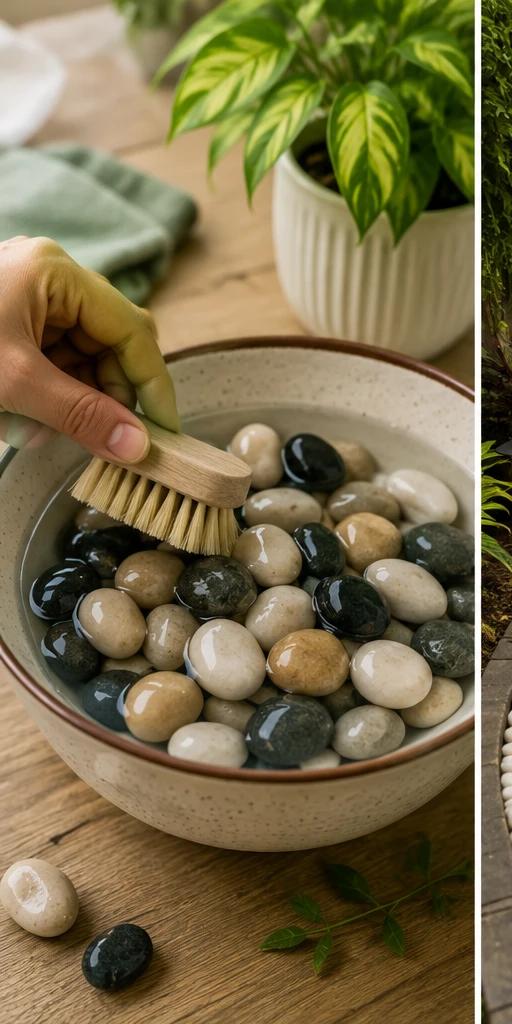
You bought beautiful pebbles. They looked perfect for a few months. Then you noticed it. The bright whites had turned dull beige. The glossy blacks had a chalky film over them. The mixed earth-tones looked like they had been sitting in a forgotten corner of a garden, which, to be fair, is often exactly what happened.
The good news is that decorative pebbles almost never go bad. They just go dusty. Or filmy. Or, in Indian monsoon, slightly greenish. And every one of those problems has a simple, kitchen-cupboard fix.
In this guide, we are walking through exactly how to clean and maintain decorative pebbles at home, whether they live in your indoor planters, on your balcony floor, in a vase centrepiece, or scattered across an outdoor garden bed. The methods are gentle enough for polished pebbles, effective enough for monsoon algae, and use ingredients you almost certainly already have.
This is the same approach we use at Floramine to keep styled planters, floral arrangements and gifting setups looking newly delivered, weeks after they've been set up.
Why Decorative Pebbles Get Dirty in the First Place
Understanding the cause makes the cleaning quicker and the maintenance smarter. Pebbles collect grime from five main sources:
- Dust and air pollution, especially in Indian cities where balcony pebbles dull within weeks 2. Soil splash when watering indoor or outdoor planters
- Hard water deposits that leave whitish or chalky films, particularly on dark pebbles 4. Algae and mildew, which thrive in humid spots, near water features and during monsoon 5. Coating breakdown on polished pebbles exposed to direct sunlight over time
Most of these are surface issues. Almost none of them mean your pebbles are ruined. A 15-minute clean usually brings them back.
What You'll Need (Things You Already Have at Home)
Before starting, gather these:
- A bucket or large bowl
- A sieve, colander or mesh strainer (for small pebbles)
- White vinegar (the regular kitchen kind)
- Mild dish soap (a few drops only)
- Baking soda (for stubborn stains)
- A soft-bristled brush, old toothbrush, or sponge
- A garden hose or a jug of clean water
- An old towel or flat tray for drying
- Gloves (optional, but nice for cold water and rough pebbles)
Skip these: bleach (harsh on planters, plants and skin), wire brushes (scratch polished pebbles), and harsh acidic cleaners like toilet cleaner (will eat through any coating).
Method 1: The Quick Refresh (For Indoor Planter and Vase Pebbles)
Use this method for pebbles that have only collected dust, light soil splash or a mild film. This takes about 15 minutes.
Step 1: Carefully scoop the pebbles out of the planter or vase. Place them in a bowl.
Step 2: Rinse them under running water in a sieve. Most of the dust will wash off immediately.
Step 3: Add a few drops of mild dish soap to a bowl of warm water. Soak the pebbles for 5 to 10 minutes.
Step 4: Gently swirl the pebbles around. For polished pebbles, use your hands. For matte river pebbles, a soft brush helps.
Step 5: Rinse thoroughly under clean water until no soap remains.
Step 6: Spread on an old towel and let them air dry completely before placing them back. Damp pebbles in a planter can encourage mould.
This method works beautifully for white polished pebbles, black polished pebbles and mixed indoor pebbles used in centrepieces.
Method 2: The Deep Clean (For Outdoor and Balcony Pebbles)
Use this method when pebbles have visible algae, monsoon film, dust caking, or have not been cleaned in months. This takes about 30 to 45 minutes.
Step 1: Sweep or rake out fallen leaves, twigs and large debris.
Step 2: Collect the pebbles in batches. For large areas, do them in sections.
Step 3: Place pebbles in a sieve and rinse under a garden hose to remove loose dirt.
Step 4: Prepare a cleaning solution: 1 part white vinegar to 2 parts water in a bucket. Soak the pebbles for 20 to 30 minutes.
Step 5: Use a stiff-bristle brush to scrub stubborn areas, especially algae patches or hard water stains.
Step 6: Rinse the pebbles thoroughly with clean water. Repeat the rinse twice for vinegar smell to fully dissipate.
Step 7: Spread on a flat surface in indirect sunlight to dry. Avoid stacking, since trapped moisture invites mildew.
Step 8: Once fully dry, return them to the planter, garden bed or balcony floor.
A note for Indian homes: this is the ideal post-monsoon ritual. One thorough clean in late September brings outdoor pebbles back to near-new condition for the rest of the year.
Method 3: Restoring Shine on Polished Pebbles
Polished pebbles lose their gloss for two reasons: dust film and coating wear. The first is easy to fix; the second is harder, but manageable.
For dust film (the most common issue):
Clean using Method 1 above
Once fully dry, wipe each pebble with a soft microfibre cloth
Apply a drop of food-safe mineral oil or baby oil on the cloth and gently wipe again
Buff with a dry corner of the cloth to remove excess oil
The mineral oil enhances depth and shine without leaving residue that affects plants.
For coating wear (advanced fix):
If polished pebbles have lost their gloss because of UV exposure or age, you can re-seal them: 10. Clean thoroughly using Method 2
Let them dry for 24 hours
Apply a thin coat of food-safe natural stone sealer (available online and at hardware stores in India)
Let cure for 24 to 48 hours before placing them back
Re-sealing is worth it for premium pebbles on display, less worth it for bulk outdoor pebbles.
How to Remove Specific Stains from Decorative Pebbles
|
Stain Type |
Best Cleaning Method |
|
Dust and surface film |
Plain water rinse + mild dish soap |
|
Hard water marks |
1:2 white vinegar and water soak, 20 minutes |
|
Algae and mildew (greenish film) |
1:1 white vinegar and water soak, 30 minutes, scrub |
|
Soil splash and mud |
Soak in soapy water, then scrub with soft brush |
|
Stubborn organic stains |
Paste of baking soda + water, leave 10 minutes, rinse |
|
Oil stains (from candles, cooking) |
Dish soap + warm water, soak 20 minutes |
Rust spots (from nearby metal) Lemon juice + salt, brush gently, rinse well
Always test the cleaning method on 4 to 5 pebbles first, especially for polished or dyed pebbles, before doing the whole batch.
How to Clean Pebbles in an Aquarium
Aquarium pebbles need a slightly different approach because you cannot risk any chemical residue.
Remove the pebbles in batches with a clean net or scoop
Place them in a bucket of warm water (never use soap, vinegar, or any cleaner)Stir vigorously by hand for 2 to 3 minutes
Drain and refill until the water runs clear
Let them air dry on a clean towel before returning to the tank
For very dirty aquarium pebbles, a saltwater soak (2 tablespoons of aquarium salt per litre) for 30 minutes works well to kill bacteria without harming future fish.
How to Maintain Pebbles So They Stay Clean Longer
Cleaning is the cure. Maintenance is the prevention. A few small habits keep your pebbles looking great with very little effort.
- Rinse weekly for outdoor balcony pebbles, especially during winter and summer dust seasons • Wipe vase and centrepiece pebbles fortnightly with a damp cloth
- Top up your planter pebble layer every 6 months to replace any that have shifted or got lost • Use a landscape fabric below outdoor pebble areas to prevent soil mixing in from underneath • Keep planters slightly raised off the floor where possible, so pebbles don't sit in stagnant water • Cover decorative pebble water features when not in use to prevent algae buildup • Refresh the look annually by adding a small handful of new matching pebbles to top up
- Avoid mixing freshly cleaned pebbles with old, unwashed ones since the contrast will look uneven
Indian Climate Tips: Monsoon, Summer Dust and Hard Water
India brings three specific pebble problems that don't show up in international guides.
Monsoon mould and algae: The high humidity from June to September is when most pebble problems begin. Algae spores settle on moist pebble surfaces and bloom into a greenish film. The fix is a once-a-year deep clean in late September with the 1:1 vinegar method described above. Prevention: ensure good drainage under outdoor pebble areas.
Summer dust accumulation: Cities like Delhi, Mumbai, Bengaluru, Chennai and Hyderabad see significant outdoor dust between February and May. Rinse outdoor pebbles every two weeks during these months. Indoor pebbles are not as affected unless windows stay open near busy roads.
Hard water stains: Much of India has hard water. Vases, glass bowls and planters develop whitish chalky deposits on pebbles over weeks. The vinegar soak (Method 2) dissolves these effectively. If hard water is an ongoing issue, use filtered or RO water for rinsing pebbles in display centrepieces.
Common Mistakes That Damage Decorative Pebbles
- Using bleach on coloured or polished pebbles (can fade the colour)
- Scrubbing polished pebbles with wire brushes (creates micro-scratches)
- Power washing small pebbles too closely (blasts them out of place)
- Putting damp pebbles directly back into planters (causes root rot and mould) • Mixing newly cleaned pebbles with very old ones (creates an uneven, patchy look) • Sealing pebbles before they are fully dry (traps moisture, dulls the finish)
- Using floor cleaners or toilet cleaners (the acid can dissolve coatings)
- Cleaning pebbles in direct harsh sunlight (water dries too fast and leaves streaks on polished varieties)
How Often Should You Clean Your Pebbles?
A simple maintenance calendar:
|
Location |
Quick Refresh |
Deep Clean |
|
Indoor planter pebbles |
Every 2 to 3 months |
Every 12 months |
|
Vase and centrepiece pebbles |
Every 2 weeks |
Every 3 months |
|
Aquarium pebbles |
Every 2 to 4 weeks |
At every tank reset |
|
Balcony floor pebbles |
Once a month |
Twice a year |
|
Outdoor garden pebbles |
Every 1 to 2 months |
Once a year (post-monsoon) |
|
Water feature pebbles |
Every 2 to 3 weeks |
Every 2 months |
This schedule keeps the styling fresh without becoming a chore.
When to Replace Pebbles Instead of Cleaning Them
Cleaning works for almost every situation, but sometimes replacement makes more sense: • The pebbles have lost more than half their original colour intensity
- The polished coating has flaked off in patches and cannot be re-sealed evenly • The pebbles smell musty even after multiple cleans (deep mould)
- More than 25 percent are chipped, broken or missing
- You are restyling the space with a different colour or finish
Pebbles are inexpensive enough that replacement is rarely a problem. Most Floramine customers refresh their pebble layer every 18 to 24 months, more for the look update than for actual damage.
Conclusion
Decorative pebbles are one of the lowest-maintenance styling elements you'll ever own. They don't fade like fabric, they don't chip like ceramic, and they don't wilt like flowers. All they ask for, occasionally, is a rinse, a soak and a few minutes of attention.
Build a small cleaning ritual into your seasonal home care. Once a quarter for indoor pebbles. Once after monsoon for outdoor ones. A quick refresh for centrepieces every couple of weeks. That's truly all it takes to keep your pebbles looking like the day they arrived.
A clean pebble layer changes how a planter, a balcony or a centrepiece feels. The plant looks healthier. The pot looks newer. The whole space looks cared for. It is one of the smallest details in home styling and one of the most rewarding.
FAQ: Cleaning and Maintaining Decorative Pebbles
Q1. Can I clean decorative pebbles with just water?
For light dust, yes. A weekly rinse keeps most pebbles looking clean. For deeper grime, algae, or hard water marks, you'll need a mild vinegar or soap solution.
Q2. Is vinegar safe for polished pebbles?
Yes, in a diluted form (1:2 with water). Avoid soaking polished pebbles in vinegar for more than 30 minutes since the acid can slowly affect the coating. Always rinse thoroughly afterward.
Q3. How do I clean white pebbles that have turned yellow or beige?
Soak them in a 1:1 white vinegar and water solution for 30 minutes, scrub gently with a soft brush, then rinse. For very stubborn yellowing, repeat the process or finish with a baking soda paste.
Q4. Can I use bleach on garden pebbles?
We don't recommend it. Bleach can fade coloured pebbles, damage nearby plants, and is harsh on skin. Vinegar and baking soda work nearly as well without the risks.
Q5. How do I dry pebbles after washing?
Spread them in a single layer on an old towel or flat tray. Let them dry naturally for at least 3 to 4 hours, or longer in humid weather. Never use a hair dryer or stack damp pebbles.
Q6. Do I need to clean pebbles before using them for the first time?
Yes, always. Fresh pebbles often carry quarry dust, packaging residue or transport grime. A quick rinse before use keeps your planters and vases clean.
Q7. How can I prevent algae from growing on outdoor pebbles?
Ensure good drainage, avoid prolonged shade with constant moisture, and do a vinegar-water rinse once every 2 months during monsoon and humid months.
Q8. Are decorative pebbles safe for pets after cleaning?
Yes, as long as you rinse out all soap or vinegar residue thoroughly. Pebbles cleaned with plain water or food-safe solutions are entirely pet-safe once dry.
Q9. Can I reuse old pebbles in a new planter or display?
Absolutely. Deep clean them once using Method 2, dry fully, and they're as good as new. This is a great budget-friendly way to restyle without buying fresh stock every time.