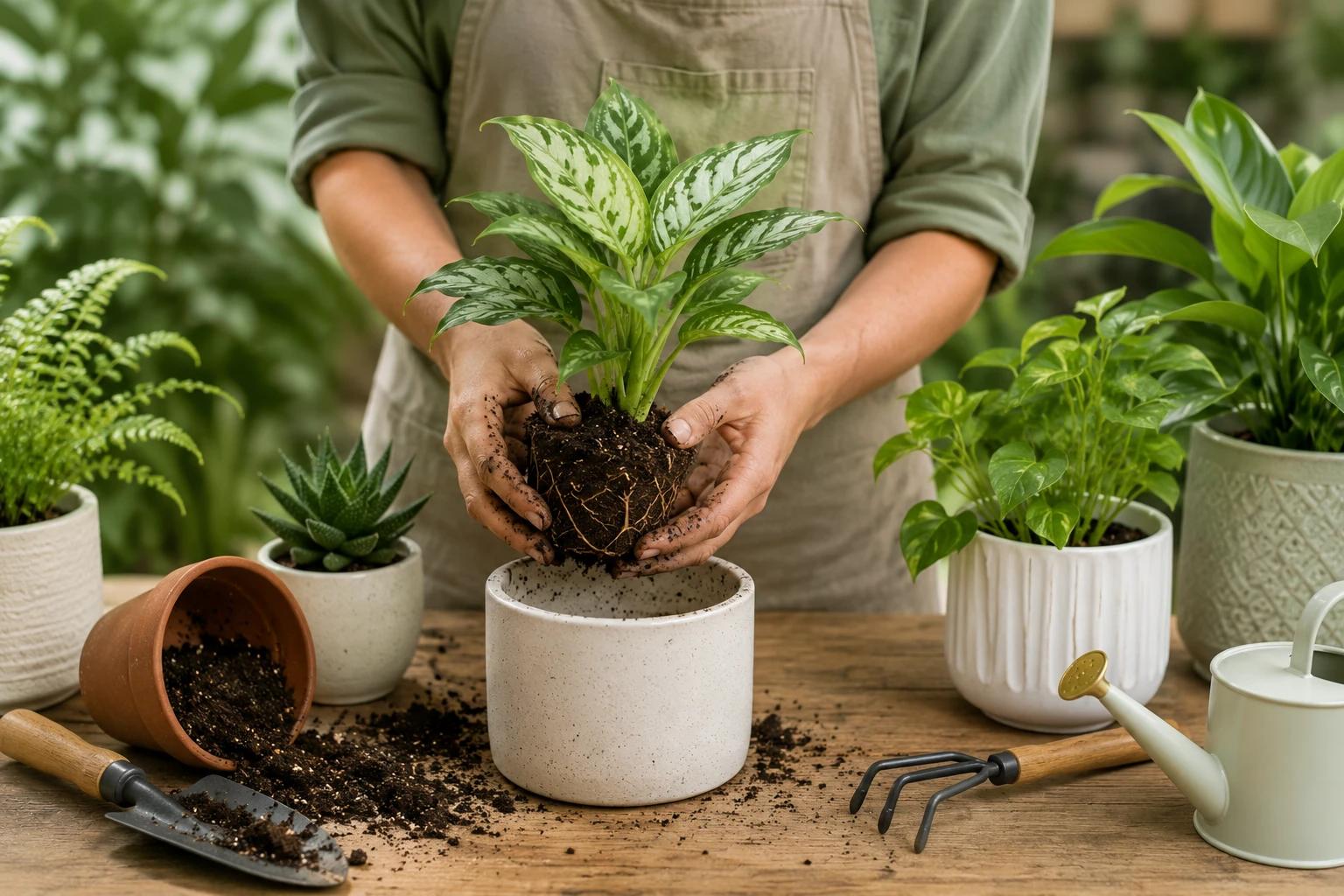
Welcome to the club. You bought a plant. Or maybe two. Maybe they were gifts, or maybe you finally cracked and adopted that money plant your friend kept telling you about. Either way, you are now a plant parent.
And, like every new plant parent, you're probably about to make at least three mistakes from this list. Possibly all ten. That's not a criticism. That is the universal first chapter of plant parenting, and almost every healthy indoor garden today belongs to someone who once stood over a wilted, sad-looking plant wondering what they did wrong.
The good news is that plant parenting has a very short learning curve. Most mistakes show up in the first two months, are easy to spot once you know what to look for, and even easier to fix once you understand why they happened.
In this guide, we are walking through the 10 most common gardening mistakes new plant parents make, with India-specific context and the fixes we share with first-time Floramine customers every week. Bookmark this one. It will save more plants than you think.
Mistake 1: Overwatering Your Plants
This is the number one killer of indoor plants worldwide. Not neglect. Not pests. Love, expressed as too much water.
Most new plant parents water their plants on a schedule (every Monday, every other day, daily in summer) instead of based on what the plant actually needs. The result is constantly soggy soil, which suffocates the roots and causes root rot. Leaves yellow. Stems soften. The whole plant collapses.
The fix:
- Always check the top inch of soil with your finger before watering. If it's still moist, wait.
- For most low-maintenance plants (snake, ZZ, money plant, succulents), watering every 1 to 3 weeks is plenty.
- Water deeply but less frequently. Half-watering daily is worse than a thorough watering once a week.
- In monsoon, halve your usual watering frequency. Humidity does part of the job.
- Add a pebble topdressing layer. It slows evaporation and helps you avoid the constant "looks dry, must water" reflex.
If your plant is already overwatered (mushy leaves, fungus gnats, smelly soil), stop watering immediately, repot if needed into fresh dry soil, and let it recover slowly.
Mistake 2: Using Pots Without Drainage Holes
That pretty ceramic planter with no drainage hole? It's a beautiful trap. Water collects at the bottom, the soil stays waterlogged, and the roots rot from below.
This is the second most common mistake, often paired with mistake number one to deadly effect. The fix:
- Always pick planters with drainage holes for direct planting.
- If you bought a no-hole planter you love, use the double pot method: keep the plant in its nursery pot (which has holes) and place it inside the decorative pot. Lift out to water and let drain in the sink, then return it.
- Adding pebbles to the bottom of a hole-less pot does NOT create drainage. It just reduces the amount of usable soil while keeping the water trapped.
- Always use a saucer under planters with drainage to protect floors and furniture. A real planter with proper drainage is one of the best beginner investments you can make.
Mistake 3: Putting Plants in the Wrong Light
"It's a plant. Plants like sun. I'll put it on the windowsill." This is how most light mistakes begin.
Different plants want very different light. A snake plant tolerates a dim corner. A succulent demands hours of bright light. A peace lily burns in direct sun. Putting any of them in the wrong spot leads to slow decline, yellowing, leggy stretching, or burnt leaves.
The fix:
- Read the care label or research the plant's light needs BEFORE choosing a spot. • "Bright indirect light" means near a window but not in the direct path of sunlight. • "Low light" means a corner of the room with some ambient light, not a dark closet. • South-facing windows in India get harsh sun. East and north-facing get gentler light. • Rotate the plant a quarter turn every 2 weeks for even growth.
- If a plant is leaning toward a window, it's asking for more light. If it's bleached or scorched, it's asking for less.
For Indian homes, balconies usually offer the brightest light and bedrooms the lowest. Match the plant to the room, not the other way around.
Mistake 4: Repotting Too Soon After Buying
Bringing home a new plant feels exciting. The temptation to immediately move it into "your" pot is strong. But the plant has just moved from a nursery to your home, which is already a major change in light, humidity and temperature.
Repotting on day one adds physical stress on top of environmental stress. Many plants drop leaves in protest. Some never recover.
The fix:
- Leave the plant in its nursery pot for 2 to 4 weeks after bringing it home.
- Use the double-pot method (mistake 2 above) so you can still display it beautifully right away. • Repot only after the plant has clearly settled in: new leaves, no drooping, normal colour. • Repot in the morning, not in peak afternoon heat.
- Choose a new pot only 1 to 2 inches larger in diameter, never dramatically bigger. The pot is for the plant. Let the plant decide when it's ready.
Mistake 5: Over-Fertilizing (or Fertilizing at All in the First Month)
Eager new plant parents often reach for fertilizer too soon, thinking more nutrients equals faster growth. In reality, nursery plants come already well-fed for weeks. Adding more fertilizer in the early days burns the roots and stresses the plant.
This is one of the most common reasons for sudden yellow-edged leaves and stunted new growth. The fix:
- Skip fertilizer entirely for the first 4 to 6 weeks after bringing a plant home.
- After that, use a diluted, balanced liquid fertilizer once every 4 to 6 weeks during growth seasons (spring and monsoon in India).
- Halve the recommended dose on the fertilizer label. Most plants need less than the bottle says. Skip fertilizing in winter when most indoor plants are dormant.
- Never fertilize a stressed, drooping or recently repotted plant.
When in doubt, don't fertilize. A plant that needs nothing is more common than a plant starving for nutrients.
Mistake 6: Ignoring Humidity, Especially in AC-Heavy Indian Homes
Air-conditioned homes are dry. Drier than most tropical plants prefer. Crisp brown leaf tips, sudden leaf drop and stunted growth are classic AC-humidity symptoms.
This mistake is invisible because new plant parents rarely think about humidity. The plant is being watered. It's getting light. Why is it still struggling? Because the air itself is too dry.
The fix:
- Group plants together. They naturally create a micro-humid zone around each other. • Place a pebble tray (a tray of pebbles with a thin layer of water) under or near the plant. • Mist humidity-loving plants (calatheas, ferns, peace lilies) once or twice a week.
- Avoid placing plants directly under AC vents.
- Add a small humidifier in rooms with multiple plants if you live in a heavily AC-cooled flat. Snake plant, ZZ and succulents handle dry air well. Calatheas, ferns and peace lilies need more attention.
Mistake 7: Choosing High-Maintenance Plants as Your First Plant
It's tempting. The fiddle-leaf fig looks stunning. The orchid is delicate and beautiful. The bonsai feels like a personality upgrade. So you start with one of these and watch it die slowly, then conclude that you're "bad with plants."
You're not bad with plants. You picked the wrong starter plant.
The fix:
- Start with proven beginner plants: snake plant, ZZ plant, money plant, pothos, succulents, jade plant, lucky bamboo.
- Add one new plant at a time. Get comfortable with each before adding the next.
- Save the high-maintenance plants (fiddle-leaf fig, orchids, ferns, calatheas) for after you've successfully kept 3 to 4 easy plants alive for 6+ months.
- A small healthy plant beats a large dying one every time.
Every confident plant parent today started with a forgiving plant. There's no virtue in skipping that step.
Mistake 8: Skipping Leaf Cleaning and Letting Dust Build Up
This is the quiet mistake. Plants are not just decorative. They are photosynthesizing machines, and dust on leaves physically blocks light and air exchange.
In Indian cities (Delhi, Mumbai, Bengaluru, Chennai), indoor leaf dust accumulates within 2 to 3 weeks. The plant slowly loses efficiency, looks duller, and eventually grows slower.
The fix:
- Wipe leaves with a damp microfibre cloth once every 2 to 3 weeks.
- For plants with many small leaves (pothos, money plant), gently shower them in the bathroom every few months.
- Avoid commercial leaf shines, they clog pores.
- A diluted spray of plain water with a few drops of mild dish soap works well for greasy dust.
- Dust pebble topdressing too. A clean pebble layer keeps the whole planter looking and performing better.
A clean leaf is a working leaf. Five minutes a fortnight makes a real difference.
Mistake 9: Misreading Plant Distress Signals
Plants do communicate. New plant parents often misread the signals, reacting to the wrong cause. Common misreads:
- Yellowing leaves blamed on underwatering (usually it's the opposite)
- Drooping leaves treated with water (often a sign of overwatering or root damage) • Brown leaf tips blamed on the plant being "old" (usually low humidity or hard water)
- Slow growth interpreted as needing more fertilizer (often a light or pot-size issue) The fix:
|
Symptom |
Most Common Cause |
First Fix |
|
Yellow lower leaves |
Overwatering |
Reduce watering, check drainage |
|
Wilting despite moist soil |
Root rot |
Repot, trim affected roots |
|
Brown leaf tips |
Low humidity or salt buildup |
Mist, use filtered water |
|
Crispy leaf edges |
Direct sun burn |
Move slightly away from window |
|
Pale, leggy growth |
Not enough light |
Move closer to bright indirect spot |
|
Sudden leaf drop |
Recent move or sudden temperature change |
Be patient, let it acclimate |
|
White crust on soil |
Hard water deposits |
Flush soil with filtered water |
|
Small flying insects |
Fungus gnats from overwatering |
Let soil dry, add pebble topdressing |
When in doubt, observe before acting. Most plant problems get worse from over-correction. Mistake 10: Inconsistent Care (the Most Underrated Mistake)
This one doesn't get talked about enough. Most new plant parents either over-care (water daily, fertilize weekly, move the pot around constantly) or under-care (forget the plant for three weeks, then drown it apologetically).
Plants thrive on consistency. Same spot, same watering pattern, same light, same temperature, week after week.
The fix:
- Pick one day each week as "plant check day". Walk past every plant, look at the leaves, check the soil, decide who needs water.
- Don't move plants around frequently. Find the right spot and leave them there for at least 6 to 8 weeks.
- Don't try a new fertilizer or pesticide on every plant at once. Test on one.
- Travel-proof your care: water thoroughly before you leave, pebble-top the soil to retain moisture, and don't expect anyone to "water as needed" without specific instructions.
A bored plant in a stable home is a happy plant. Plants prefer predictable routine over occasional drama.
Bonus: 3 Common Mistakes Specific to Indian Plant Parents
Beyond the universal ten, a few mistakes show up especially often in Indian homes:
Monsoon overwatering: Plants need significantly less water in July to September. The high humidity does part of the watering. Yet most plant parents continue their summer schedule and lose plants to root rot.
Festival closures and trips: A 10-day Diwali break or summer holiday can be tough on plants. The fix: soak the soil thoroughly the day before leaving, add a pebble topdressing layer to slow evaporation, and group plants together for humidity. Most low-maintenance plants survive 2 weeks easily this way.
Direct AC airflow: Many Indian living rooms have ACs aimed at popular plant corners. The cold dry air dries leaves fast. Move plants 4 to 5 feet away from direct AC airflow.
How to Recover a Struggling Plant: The Diagnostic Checklist
Before throwing away a plant that looks sad, run through this:
- Check the soil. Is it soggy? Bone dry? Smelly? That's usually the issue.
- Look at the roots. Slide the plant out gently. White roots are healthy, brown or mushy roots are not.
- Check the light. Has the plant moved spots recently? Has the season changed the available light? 4. Look for pests. Flip leaves, check under stems, look at the soil surface.
- Reset. Trim damaged leaves, repot if root rot is present, return to a stable spot, water minimally.
Most "dying" plants are actually just stressed. Given two to four weeks of stable, attentive care, they bounce back.
What Makes a Great First Plant Setup
If you're just starting out, here's the simplest setup we recommend at Floramine: • One forgiving plant (snake, ZZ, money plant, or jade)
- One ceramic planter with drainage holes (or the double-pot trick)
- A small bag of decorative pebbles for topdressing
- A saucer under the planter to protect surfaces
- A spot near indirect light, away from AC vents
That's it. A setup like this almost guarantees plant-parent success for the first 6 months. After that, add one new plant at a time as your confidence grows.
FAQ: Gardening Mistakes for New Plant Parents
Q1. Why are my new plants dying so quickly?
The most common reasons are overwatering, wrong light, and repotting too soon after buying. Start by checking the soil moisture and light placement before anything else.
Q2. How often should I water my indoor plants?
There's no fixed schedule. Check the top inch of soil with your finger. Water only if it feels dry. Most low-maintenance plants need watering every 1 to 3 weeks, not daily.
Q3. Why are the leaves of my plant turning yellow?
The most common cause is overwatering, not underwatering. Reduce watering, check that the planter has proper drainage, and let the soil dry out before watering again.
Q4. Should I repot a new plant immediately after buying?
No. Give it 2 to 4 weeks to settle into your home environment first. Repotting on day one adds stress on top of stress and often causes leaf drop.
Q5. How much sunlight do indoor plants need?
It depends on the plant. Most beginner plants prefer bright indirect light. Avoid harsh direct afternoon sun and avoid completely dark corners with no natural light.
Q6. Do I need to add fertilizer to a new plant?
Not for the first 4 to 6 weeks. Nursery plants come pre-fed. After that, use a diluted balanced fertilizer once a month during growing seasons.
Q7. What's the easiest plant for a beginner in India?
Snake plant, ZZ plant, money plant, pothos and succulents are the most beginner-friendly. All tolerate low light, irregular watering and Indian climate variations well.
Q8. Can I save a plant from root rot?
Yes, if caught early. Remove the plant from soil, trim away brown mushy roots, let the healthy roots air-dry for a few hours, and repot in fresh dry soil. Water sparingly afterwards.
Q9. How do I take care of my plants when I travel?
Soak the soil thoroughly before leaving, add pebble topdressing to slow evaporation, group plants together for humidity, and move them slightly away from direct sun. Most low-maintenance plants handle 10 to 14 days easily.
Q10. Why do my plants thrive at the nursery but struggle at home?
Nurseries provide optimal humidity, light and temperature. Home conditions are different. Give your plant time to acclimate (2 to 4 weeks), and don't change too many things at once.
Conclusion
Every experienced plant parent has a graveyard. A few crispy money plants, a fern that gave up dramatically in week three, a succulent that mysteriously rotted. The difference between someone who keeps trying and someone who gives up is not the number of plants they've killed. It's the willingness to learn one small thing from each one.
These ten mistakes are the universal starting point. Fix them and you'll already be ahead of most new plant parents. Add a little patience, a little observation, and the right starter plants, and within 6 months your home will feel different. Greener. Calmer. More yours.
Plant parenting is not about being perfect. It's about being slightly more thoughtful than you were last week. Start there. The plants will do the rest.