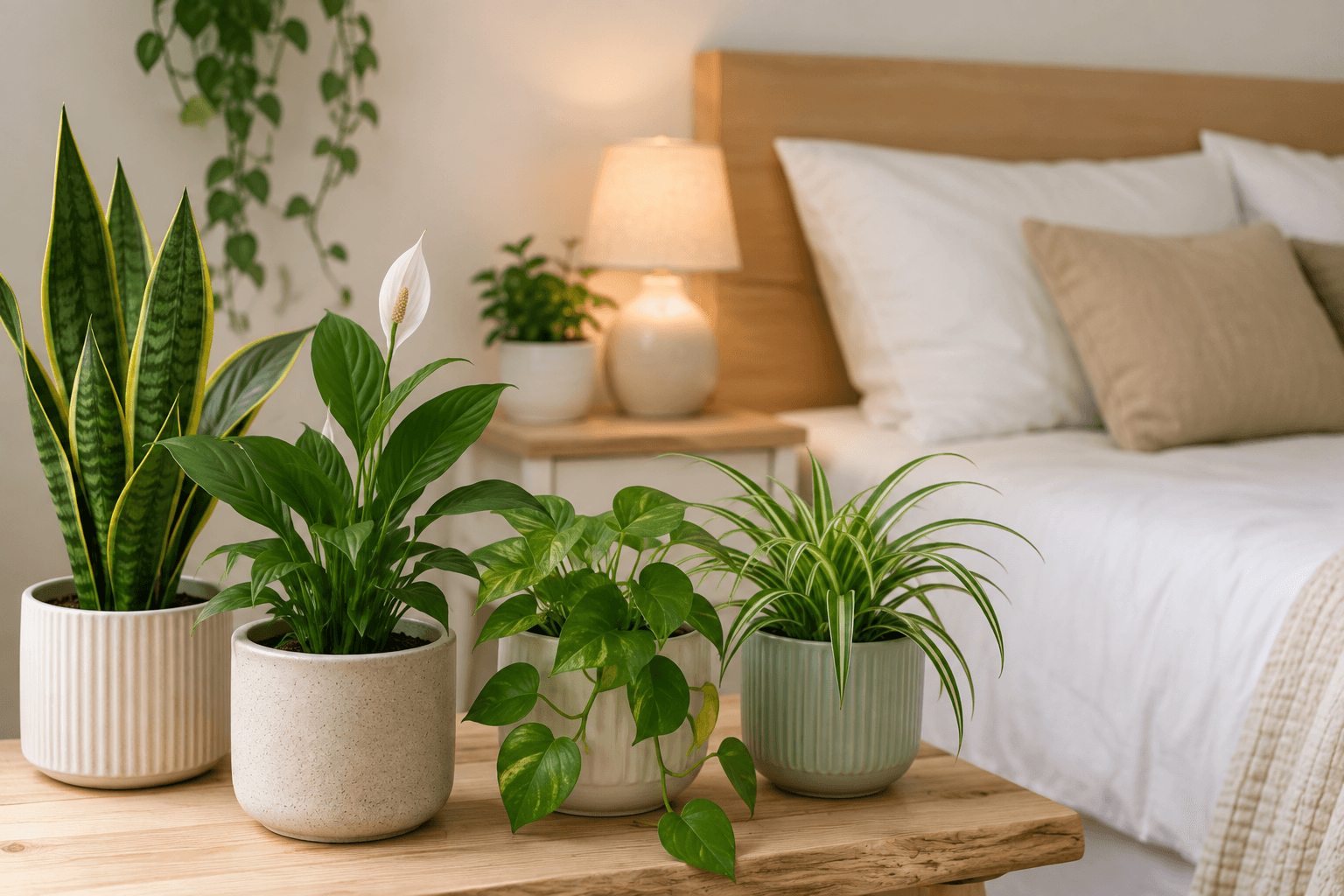
Your bedroom is the room you breathe in the longest. Six to eight hours every night, eyes closed, lungs working, body recovering. And yet, of all the rooms in a home, the bedroom is often the most overlooked when it comes to air quality.
Closed windows, central AC, fresh paint, new mattresses, polished furniture, and city dust quietly add up to an indoor air mix that is rarely as clean as we assume. The good news is that one of the oldest, simplest fixes still works beautifully. Plants.
Specific plants, placed thoughtfully in your bedroom, can filter common indoor pollutants, release oxygen at night, raise humidity gently, and make the entire space feel calmer the moment you walk in. NASA confirmed it decades ago. Modern indoor air studies have backed it up. And anyone who has woken up in a plant-filled room knows the difference is real.
In this guide, we are sharing the 7 best bedroom plants for better air quality, the ones we recommend most often at Floramine for Indian homes, with notes on care, pet safety, styling and the small details that make them genuinely work.
How Plants Improve Bedroom Air Quality
Before the list, a quick word on the science, because it matters.
In 1989, NASA published the Clean Air Study, looking for natural ways to purify air in sealed space stations. The result became one of the most cited indoor-air studies of all time. They found that certain houseplants absorb common indoor pollutants like formaldehyde, benzene, trichloroethylene, xylene and ammonia through their leaves and root systems.
These pollutants come from sources most people don't even notice: furniture polish, paint, carpets, plastic, cleaning sprays, cosmetics, printers, fresh paint, even some fabrics. Each one is mild on its own. Together, over months and years in a closed room, they add up.
Plants help in three ways:
- Filtering pollutants through tiny pores in their leaves
- Releasing oxygen during photosynthesis
- Raising humidity through transpiration, which eases dry skin and dry throats
Most plants stop releasing oxygen at night. A small group, however, keeps going. These are called CAM plants (Crassulacean Acid Metabolism), and they include snake plant, aloe vera, peace lily and orchids. That's why these few are repeatedly recommended for bedrooms specifically.
Plants are not a replacement for an air purifier. But two to four plants in a bedroom, kept healthy, make a noticeable difference in how the air feels and smells over time.
The 7 Best Bedroom Plants for Better Air Quality
- Snake Plant (Sansevieria trifasciata)
If we had to pick just one bedroom plant, this is it.
The snake plant is one of the very few houseplants that actively release oxygen through the night, making it the most-recommended bedroom plant worldwide. It also filters formaldehyde, benzene, xylene, toluene and trichloroethylene from indoor air. And it tolerates the kind of neglect most bedroom plants don't survive.
Why it works in a bedroom:
- Releases oxygen at night (CAM plant)
- Tolerates low to medium light easily
- Survives 2 to 3 weeks without watering
- Vertical, sculptural shape suits bedside tables and corners
Care notes:
- Light: low to bright indirect
- Water: every 2 to 3 weeks
- Soil: well-draining cactus mix
Pet safety: Mildly toxic to cats and dogs if chewed. Keep out of reach in pet-friendly homes.
Floramine styling tip: Place a tall snake plant in a matte ceramic planter with white pebble topdressing on a bedside table. Quiet, sculptural, and calming.
- Peace Lily (Spathiphyllum)
Few bedroom plants do as much as the peace lily. It removes benzene, formaldehyde, trichloroethylene and ammonia, reduces mold spores, raises humidity by up to 5 percent, and blooms with elegant white spathes that look beautiful in a styled bedroom.
It is one of the highest-performing air-purifying plants on the NASA list.
Why it works in a bedroom:
- Top-rated air purifier on the NASA Clean Air Study
- Raises humidity, easing dry throats and noses
- Reduces airborne mold spores (helpful for allergies)
- Blooms occasionally with beautiful white flowers
Care notes:
- Light: medium to bright indirect (avoid direct sun)
- Water: weekly, or when leaves slightly droop
- Soil: rich, well-draining potting mix
Pet safety: Toxic to cats and dogs if ingested. Keep out of reach.
Floramine styling tip: A peace lily in a white ceramic planter with white pebble topdressing makes a beautiful bedside or dresser arrangement. The white-on-white styling feels almost hotel-like.
- Areca Palm (Dypsis lutescens)
The areca palm is the friendliest, most welcoming-looking plant on this list, and one of the highest-rated humidifying plants in indoor air studies. It releases moisture into the air at impressive rates, which can transform an AC-heavy or dry bedroom.
Why it works in a bedroom:
- One of the best natural humidifiers among houseplants
- Filters formaldehyde, xylene and toluene
- Pet-friendly and non-toxic
- Beautiful soft green fronds add warmth
Care notes:
- Light: bright indirect (near a window, not direct sun)
- Water: weekly, keep soil lightly moist
- Soil: rich, well-draining mix
Pet safety: Non-toxic to cats, dogs and children. One of the safest pet-friendly bedroom plants.
Floramine styling tip: A medium areca palm in a textured ceramic floor planter is a stunning corner statement. Add a layer of pale river pebbles on top for a finished look.
- Aloe Vera (Aloe barbadensis)
Aloe vera earned its bedroom spot two ways: it releases oxygen at night (another CAM plant) and its gel doubles as a natural remedy for skin, sunburn and minor burns. A practical, working bedroom plant.
It also filters benzene and formaldehyde, both commonly released from cleaning products and cosmetics.
Why it works in a bedroom:
- Releases oxygen at night
- Bonus skincare and burn-relief uses
- Compact, fits on a windowsill or bedside table
- Very low water needs
Care notes:
- Light: bright indirect, some direct morning sun
- Water: every 2 to 3 weeks
- Soil: gritty cactus or succulent mix
Pet safety: Toxic to cats and dogs if ingested. Keep out of pet reach.
Floramine styling tip: Aloe vera in a small terracotta planter with mixed natural pebbles on top brings a warm, earthy character. Place near a window where morning light reaches.
- Spider Plant (Chlorophytum comosum)
The spider plant is one of the most pet-safe air-purifying plants you can keep in a bedroom. It filters carbon monoxide, xylene and formaldehyde, propagates easily, and produces tiny "baby spiders" that hang charmingly off the parent plant.
Why it works in a bedroom:
- Pet-safe and child-safe
- Filters carbon monoxide and formaldehyde
- Trailing baby plants look beautiful from a shelf or hanging planter
- Tolerates a wide range of light conditions
Care notes:
- Light: bright indirect (tolerates low light, just grows slower)
- Water: weekly, when topsoil feels dry
- Soil: well-draining standard mix
Pet safety: Completely non-toxic to cats and dogs. Excellent bedroom choice for pet owners.
Floramine styling tip: Place a spider plant on a high shelf or a hanging planter near the window. The trailing babies look beautiful against a textured wall. White pebble topdressing in the planter keeps the base looking neat.
- Money Plant or Pothos (Epipremnum aureum)
The most loved houseplant in India also happens to be a strong air purifier. Pothos removes formaldehyde, benzene, xylene and toluene, and grows happily in almost any light condition. Its trailing vines suit bedrooms beautifully, especially over a headboard, a wardrobe top, or a corner shelf.
Why it works in a bedroom:
- Adapts to low and indirect light easily
- Trailing vines soften room edges and shelves
- Hardy, forgiving and beginner-friendly
- Considered Vastu-friendly in Indian homes
Care notes:
- Light: low to bright indirect
- Water: when top inch of soil is dry
- Soil: standard potting mix
Pet safety: Toxic to cats and dogs if chewed. Keep on high shelves in pet homes.
Floramine styling tip: A money plant trailing down from a high wardrobe top or floating shelf creates a quiet green frame for the bed. Pebbles on top of the planter make the visible base look styled even from below.
- ZZ Plant (Zamioculcas zamiifolia)
The ZZ plant rounds out this list because of how well it suits real bedrooms. Low light, irregular watering, AC drafts, late nights, weekend trips, the ZZ handles it all. It also filters toluene and xylene from indoor air.
Why it works in a bedroom:
- Tolerates very low light (good for bedrooms with limited windows)
- Glossy leaves look beautifully styled
- Almost impossible to kill
- Filters toluene and xylene from air
Care notes:
- Light: low to bright indirect
- Water: every 2 to 3 weeks
- Soil: standard well-draining potting mix
Pet safety: Toxic to cats and dogs if ingested. Keep out of pet reach.
Floramine styling tip: A ZZ plant in a cream or beige ceramic planter with black polished pebbles on top is a fail-safe styled object for a dresser or bedside table.
Bedroom Plants: Oxygen, Pollutant Removal & Pet Safety
Snake Plant
- Releases oxygen at night: Yes
- Pollutants removed: Formaldehyde, benzene, xylene, toluene
- Pet safe: Mildly toxic
- Light needed: Low to bright indirect
Peace Lily
- Releases oxygen at night: Yes
- Pollutants removed: Formaldehyde, benzene, trichloroethylene, ammonia
- Pet safe: Toxic
- Light needed: Medium to bright indirect
Areca Palm
- Releases oxygen at night: No
- Pollutants removed: Formaldehyde, xylene, toluene
- Pet safe: Non-toxic
- Light needed: Bright indirect
Aloe Vera
- Releases oxygen at night: Yes
- Pollutants removed: Benzene, formaldehyde
- Pet safe: Toxic
- Light needed: Bright indirect
Spider Plant
- Releases oxygen at night: No
- Pollutants removed: Carbon monoxide, formaldehyde, xylene
- Pet safe: Non-toxic
- Light needed: Bright indirect
Money Plant
- Releases oxygen at night: No
- Pollutants removed: Formaldehyde, benzene, xylene, toluene
- Pet safe: Toxic
- Light needed: Low to bright indirect
ZZ Plant
- Releases oxygen at night: No
- Pollutants removed: Toluene, xylene
- Pet safe: Toxic
- Light needed: Low to bright indirect
How Many Plants Should You Keep in a Bedroom?
NASA's recommendation is one to two medium-sized plants per 100 square feet of indoor space. For a typical Indian bedroom (around 120 to 150 sq ft), this means 2 to 3 plants positioned thoughtfully:
- One larger plant in a corner (areca palm, peace lily, snake plant)
- One bedside or dresser-top plant (small snake plant, aloe vera, ZZ plant)
- One trailing plant on a shelf or hanging planter (pothos, spider plant)
This combination gives you night-time oxygen release, daytime filtering and humidity in one balanced set. More is fine. Less is also fine. Even a single snake plant on a bedside table makes a real difference.
Where to Place Plants in a Bedroom
Placement matters as much as plant choice. A few principles:
- Near a window for sun-loving plants like aloe vera, areca palm, succulents
- Away from AC vents for any plant, since cold dry air damages leaves
- At least one plant within line of sight from the bed so the visual benefit kicks in too
- Avoid placing plants directly above the bed (falling leaves, occasional water spills)
- Group plants for a humidity boost, since plants near each other create a small microclimate
- Use bedside table plants that are compact and stable, not top-heavy
- Use floor plants in corners to fill empty spaces and add height
For Indian homes specifically: avoid keeping too many plants in tightly sealed bedrooms without occasional ventilation. Open the windows for 15 to 20 minutes once a day where possible. Plants help, but airflow does the heavy lifting.
Styling Bedroom Plants with Pebble Topdressing
Pebble topdressing is the smallest detail that elevates bedroom plants from "kept" to "styled."
A one-inch layer of decorative pebbles on top of the soil:
- Covers bare soil, making the planter look finished
- Slows evaporation between waterings
- Stops fungus gnats (especially important in bedrooms)
- Adds texture and a calming visual weight to the planter
- Catches morning and evening light beautifully
Best bedroom pebble pairings:
- White polished pebbles for a calm, hotel-like bedroom look
- Pale grey or beige river pebbles for a warm, neutral feel
- Black polished pebbles in moody, layered bedrooms
- Mixed natural pebbles for a soft boho or rustic bedroom
The pebble layer is also one of the simplest ways to make your bedroom plants feel like considered decor, not just plants.
Common Bedroom Plant Mistakes to Avoid
- Choosing flowering plants that need direct sun (most bedrooms don't get enough)
- Placing plants directly under AC vents (dries leaves and stresses the plant)
- Overwatering, especially in low-light corners (the biggest cause of root rot)
- Keeping toxic plants within pet or toddler reach
- Crowding too many plants in a small, poorly ventilated room
- Skipping the saucer under planters (water rings ruin wooden bedside tables)
- Ignoring leaf dust (dusty leaves cannot purify air efficiently)
- Forgetting to rotate the plant every few weeks for even growth
Bedroom Plant Tips for Indian Homes
A few realities of Indian bedrooms that affect plant choice:
- Monsoon humidity can encourage fungus gnats. Pebble topdressing helps prevent this significantly.
- Summer heat can scorch leaves near windows. Move plants slightly away from west-facing windows during May and June.
- Long power cuts affect AC use but rarely affect plants. Plants tolerate temperature swings better than people.
- Diwali and festival dust settles on leaves quickly. Wipe leaves with a damp cloth once every 2 to 3 weeks during festival season.
- Mosquito coils and incense affect plants. Burn them in a different room or with windows open.
- Pet considerations are real. Areca palm and spider plant are the safest bedroom picks if you have cats or dogs.
When to Move a Bedroom Plant Out
A bedroom plant is helping you when it looks healthy and isn't causing problems. Move it out (temporarily or permanently) if:
- Leaves are constantly yellowing or dropping (light or watering issue) ● You're seeing fungus gnats or any pest activity
- The plant has flowered and the scent is too strong for sleep (some lilies, jasmines)
- Someone in the bedroom has a mold or pollen allergy and the plant is contributing
- The plant has clearly outgrown the space and is crowding the room
A struggling plant in your bedroom is doing the opposite of what you want. It's better to move it to a brighter, more suitable spot than to force it.
FAQ: Bedroom Plants for Air Quality
Q1. Which plant is best for a bedroom for better sleep?
The snake plant is the most-recommended bedroom plant for sleep. It releases oxygen at night, filters multiple indoor pollutants and survives almost any condition. Peace lily and aloe vera are excellent alternatives.
Q2. Is it okay to keep plants in the bedroom at night?
Yes. While most plants release small amounts of carbon dioxide at night, the quantity is negligible compared to what a sleeping person exhales. Snake plant, peace lily, aloe vera and orchids release oxygen at night, making them particularly bedroom-friendly.
Q3. How many plants should I keep in my bedroom?
NASA suggests one to two medium-sized plants per 100 square feet. For a typical Indian bedroom, 2 to 3 plants positioned around the room work well without overwhelming the space.
Q4. Which bedroom plants are safe for cats and dogs?
Areca palm and spider plant are the safest pet-friendly options. Most other air-purifying plants (snake, peace lily, money plant, aloe vera, ZZ) are mildly toxic if ingested, so keep them out of reach in pet households.
Q5. Do bedroom plants actually improve air quality?
Yes, though the effect is gradual. Studies show that plants absorb common indoor pollutants like formaldehyde, benzene and trichloroethylene through their leaves over time. They also raise humidity. They are best used alongside ventilation and (where needed) an air purifier.
Q6. What is the best low-light bedroom plant?
Snake plant, ZZ plant and money plant are the top three low-light bedroom plants. They tolerate dim corners well and still filter common indoor pollutants.
Q7. Can plants help with allergies in the bedroom?
Peace lily and spider plant are known to reduce airborne mold spores and certain allergens. However, anyone with severe pollen or mold allergies should consult a doctor and avoid heavily flowering plants in the bedroom.
Q8. How often should I water bedroom plants?
Most plants on this list need watering every 1 to 3 weeks. Always check the top inch of soil first. In AC-heavy bedrooms, watering is needed slightly more often than the average; in monsoon, slightly less.
Q9. Should I use a humidifier or plants for better bedroom air?
Use both if possible. A humidifier addresses dry air quickly and consistently. Plants gradually improve overall air quality, reduce pollutants and add humidity naturally. They serve different needs and work well together.
Conclusion
The best bedroom is the one you sleep deeply in, wake up rested from, and walk into willingly at the end of a long day. The right plants help all three.
You don't need to fill a bedroom with greenery. Start with two or three of the plants on this list. Position them thoughtfully. Top with a clean pebble layer. Open the windows for a few minutes each day. Watch the room shift from a place you sleep in to a small, considered sanctuary you actually enjoy being in.
A bedroom plant is the easiest health and decor upgrade you can give yourself. It costs less than most other room changes, takes minutes to set up, and works quietly every hour you're in the room, including the hours you're asleep.
That's a small return for one of the best decisions you can make for your home.