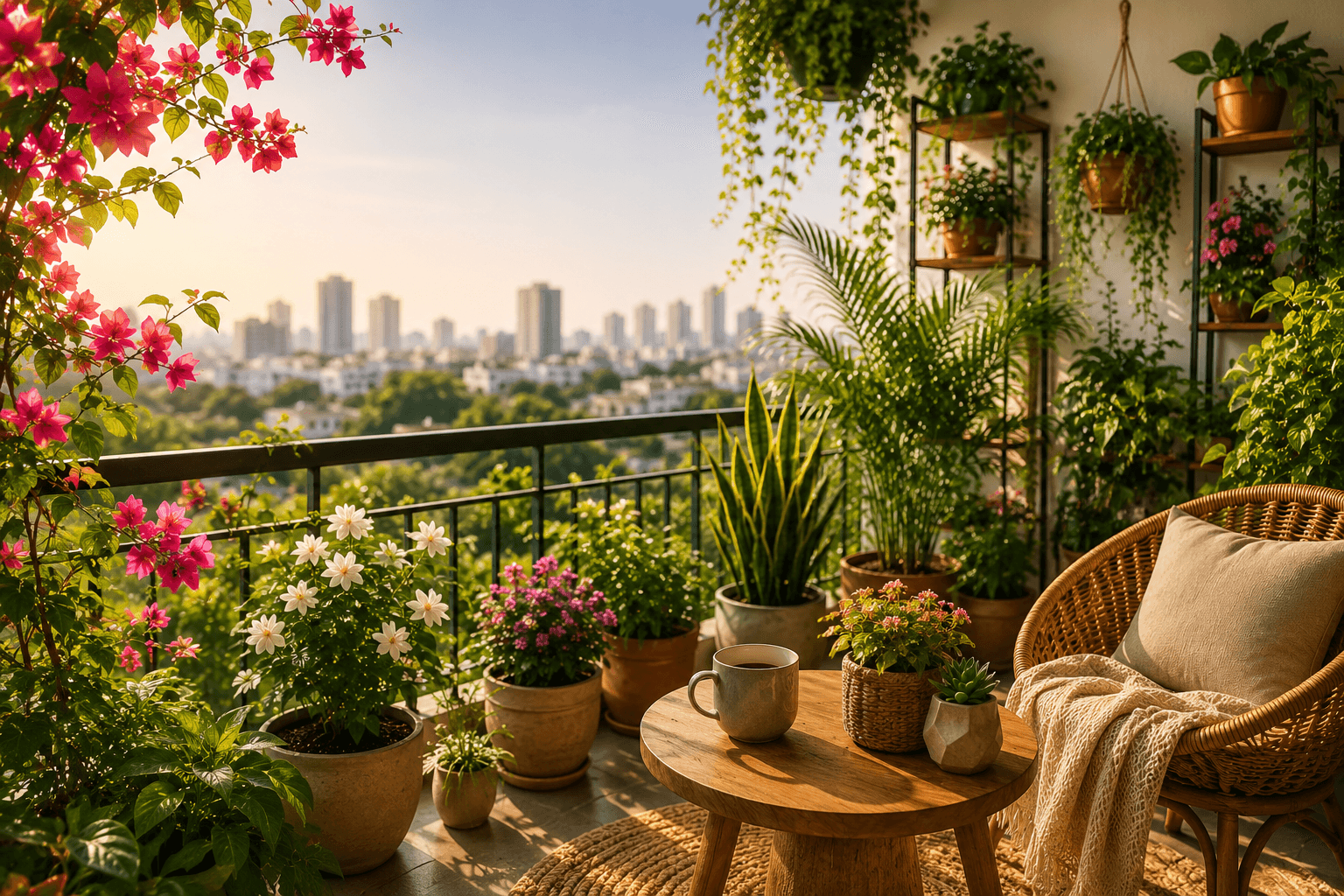
In 2026, the Indian urban landscape is changing. With high-rises dominating cities such as Bengaluru, Mumbai, Delhi-NCR, and Hyderabad, the 'balcony' has evolved from an ordinary space to an essential micro-living zone. Whether it's a tranquil spot to enjoy your morning coffee or a shade of green against the heat of urban life, Balcony Garden Plants in India are not merely a pastime — they are essential to the health of your mind and for cooling your home.
This 2026-specific guide will show you everything you need to turn your concrete slab into a lush green oasis.
Understanding Your Balcony's Micro-Climate
Before purchasing plants, consider the distinct surroundings of your outdoor patio. In 2026, an environmentally-friendly landscaping system is the best way forward.
Sunlight: The Make-or-Break Factor
- South & West Facing: These balconies receive direct, intense sunlight for 6–8 hours. Choose plants that can withstand extreme temperatures, such as Bougainvillea, Adenium, and Cacti.
- East Facing: Ideal for the early morning sun. Perfect for growing Hibiscus, Jasmine, and similar flowering plants.
- North Facing: Receives indirect light. Ideal for shade-lovers such as Snake Plants, Money Plants, and ZZ Plants.
Wind and Height
Higher floors (15th and above) are more susceptible to wind speeds. Use large ceramic or terracotta pots to prevent toppling. Also choose sturdy yet flexible plants like Jade and Bamboo.
Top Balcony Garden Plants in India for 2026
Keeping current trends, climate resilience, and healthy living in mind, here are the best plant choices for Indian balconies.
A. The "Hardy Heroes" (Full Sun)
2026 is predicted to surpass records for summer temperatures. These plants have evolved as survival specialists:
- Bougainvillea: The undisputed monarch of the Indian balcony. It thrives in direct sun and loves the blazing afternoon heat.
- Adenium (Desert Rose): Known for its large water-storing trunk (caudex), it blooms spectacularly even in Surat or Chennai temperatures.
- Kaner (Oleander): Extremely hardy and provides a thick green privacy screen.
B. Air Purifiers (Partial Shade / Indoor-Outdoor)
For city dwellers facing air quality challenges:
- Snake Plant (Sansevieria): The ultimate oxygen booster. Varieties like Zeylanica are ideal for creating balcony 'carbon-capturing' barriers.
- Money Plant (Epipremnum aureum): A classic climber, great for railings and vertical covers. • Areca Palm: Lends a tropical feel and acts as a natural humidifier.
C. The Fragrant & Spiritual Collection
- Mogra (Jasmine): Essential for the traditional Indian evening fragrance.
- Tulsi (Holy Basil): A staple in every Indian household. In 2026, Krishna Tulsi as well as Rama Tulsi remain the top-rated varieties for their curative properties.
- Aparajita (Butterfly Pea): A beautiful blue flowering plant used in the production of Blue Pea Tea — a major wellness trend anticipated to continue growing in 2026.
The 2026 Setup: Smart & Sustainable
Gardening today is about smart technology meeting traditional roots.
Vertical Gardening: Maximize Every Inch
Floor space is precious. Make the most of walls and railings with vertical arrangements. Pro Tip: Use modular horizontal frames to create a 'Living Wall' of herbs such as Mint and Coriander.
Smart Irrigation Systems
With hectic lifestyles, an automated irrigation system can be a game-changer.
- Drip Irrigation Kits: Affordable kits now let you programme timers directly from your smartphone.
- Self-Watering Containers: Available on Floramine, these pots come with reservoirs that keep soil hydrated for up to 10 days — perfect for long weekend getaways.
Pot Selection: Thermal Conductivity Matters
Avoid black plastic pots in direct sunlight — they 'cook' the roots. Instead, opt for:
- Terracotta: Breathable material that keeps roots cooler.
- Light-Coloured Ceramic: Reflects heat effectively.
- Grow Bags: Lightweight and great for balcony plants.
Care and Maintenance Strategy
Maintaining balcony gardens in India requires a seasonal plan.
The Soil Secret: 2026 Potting Mix
Never use plain garden soil — it compacts over time. The recommended 'Modern Indian Mix' consists of: • 40% Cocopeat: For moisture retention.
- 30% Vermicompost: For organic nutrition.
- 20% Perlite or Sand: For drainage.
- 10% Neem Khali: For natural pest control.
Watering Rules
- Morning and evening: During peak summer (April–June), water in the early morning or just after sunset. Watering at 2 PM can literally steam your plant roots.
- The Finger Test: Stick your finger about an inch deep into the soil. If it feels dry, water it. If it's still moist, wait.
Fertilization
In 2026, we will be getting out of chemical NPK.
- Seaweed Extract: Great for general plant health.
- Rice Water and Onion Peels: Traditional Indian "kitchen waste" fertilizers are getting a massive boost for organic gardening on balconies.
Buying Tips: Why Floramine is Your Best Bet
When it comes to Balcony Gardens in India, quality is everything. Websites such as Floramine have changed the way we buy greenery.
- Curated Selection: From cute ceramic pots for your succulents to the 'Table Palm' for your desk, they offer plants that complement modern design.
- Soil & Accessories: Purchase special pot mixes and pebbles to enhance the look of your garden.
- Plant Gifting: A unique 2026 trend — 'Plant Gifting' for corporate occasions is growing fast for those wanting to add a touch of nature without a long-term commitment.
- Secure Packaging: One of the biggest concerns in online shopping is transit damage. Floramine's secure packaging ensures your Nikodia and Jade plants arrive fresh and ready to thrive.
Creating a Wellness Zone: The 'Zen' Balcony
A Zen Balcony is a mindfully designed outdoor space that blends nature, calm, and simplicity to create a personal sanctuary for relaxation and mental well-being. Drawing from Zen philosophy — which emphasises stillness, balance, and the beauty of minimalism — a Zen Balcony uses curated plants, natural textures, soft lighting, and water elements to help you disconnect from urban stress and reconnect with the present moment. Think of it as your private retreat: no clutter, no noise, just you, greenery, and calm.
The Zen Balcony is one of the most popular design trends for 2026. Here's how to create yours:
- Seating: Use bamboo fold-up chairs or a small hanging swing (Jhula) for a grounded, organic feel.
- Decking: Tiles made from synthetic grass or timber instantly warm the space.
- Water Feature: Even a small tabletop fountain creates a gentle, soothing sound that masks city noise.
- Lighting: Warm LED strips or solar-powered lamps create a beautiful atmosphere in the evenings.
Balcony Plants: Pest & Disease Management Guide
Keeping your balcony garden healthy means staying ahead of common pests and diseases. Here is a quick-reference guide to identify problems early and apply the right remedy.
|
Pest / Disease |
Problem |
Remedy |
|
Aphids |
Small green/black insects sucking sap → leaves curl & yellow |
Spray neem oil (5 ml/L water) or mild soap solution |
|
Spider Mites |
Tiny red mites, yellow spots, webbing on leaves |
Spray water regularly + neem oil |
|
Mealybugs |
White cotton-like clusters on stems/leaves |
Dab with alcohol cotton or spray neem oil |
|
Leaf Spot (Fungal) |
Brown/black spots on leaves |
Remove infected leaves + spray fungicide (copper oxychloride) |
|
Root Rot |
Overwatering → roots decay, plant wilts |
Improve drainage, reduce watering |
|
Powdery Mildew |
White powder on leaves |
Spray baking soda solution (1 tsp/L water) |
|
Leaf Yellowing |
Nutrient deficiency / overwatering |
Correct watering schedule; check nutrients |
|
Snails & Slugs |
Holes in leaves |
Use ash, crushed eggshells, or handpick |
The transformation of your balcony into a green oasis is a journey, not a task. Choose the right Balcony Garden Plants for India, invest in the right tools from Floramine, and follow a consistent care routine — and you'll create a space that not only looks stunning, but also enhances your quality of life.
In this fast-paced 2026 world, your balcony garden will be your personal retreat — a corner of nature you can truly call your own.
Ready to get started? Visit Floramine today to discover their extensive selection of plants, pots, and garden essentials!
Frequently Asked Questions
- Which plants are best for a very small balcony in an Indian apartment? In 2026, space is at a premium. For tiny balconies, Vertical Gardening is your best friend. Opt for Money Plants (Pothos), Spider Plants, and String of Pearls that can hang or climb. If you want floor plants, choose 'vertical growers' like the Snake Plant or Areca Palm, which take up more air space than floor space. You can find compact varieties and sleek pots at Floramine specifically designed for narrow ledges.
- How often should I water my balcony plants during a 40°C+ Indian summer? With the increasing temperatures we're seeing in 2026, a 'once-a-day' rule isn't always enough. High-floor balconies experience faster evaporation due to wind.
- Terracotta pots: May need watering twice — early morning and late evening.
- Plastic/Ceramic pots: Usually once a day is sufficient.
Pro Tip: Always check the soil. If the top inch feels completely parched and crumbly, it's time to water. Avoid watering at noon, as it can cause thermal shock to the roots.
- Can I grow vegetables on my balcony in high-rise buildings?
Absolutely! In 2026, 'balcony-to-table' is a major trend. You can easily grow Chillies, Lemongrass, Mint, and Cherry Tomatoes. For higher floors (15th+), stick to leafy greens like Spinach or Methi, as they are less susceptible to strong winds compared to fruiting plants like Brinjal.
- How do I prevent mosquitoes in my balcony garden?
This is a common concern in India. To keep your green sanctuary mosquito-free:
- Avoid stagnant water: Empty your pot trays regularly.
- Plant Repellents: Incorporate Citronella, Lemongrass, and Marigolds into your collection. • Neem Oil: Regular spraying not only eliminates pests but also acts as a natural mosquito deterrent.
- Which plants can survive a north-facing balcony with no direct sunlight? North-facing balconies receive indirect light and are perfect for 'Low-Light Legends' like:
- ZZ Plant: Virtually indestructible.
- Peace Lily: For a touch of elegant white blooms.
- Aglaonema (Chinese Evergreen): For stunning variegated foliage.
- Philodendrons: Thrive in the bright indirect light common in Indian north-facing flats.
- Is it safe to buy plants online from websites like Floramine?
Yes! Online plant shopping has matured significantly by 2026. Floramine uses specialised, breathable corrugated packaging that keeps plants secure and hydrated for up to 5–7 days in transit. Plus, buying online gives you access to exotic varieties that your local nurseryman might not carry.
- Why are the tips of my plants turning brown?
In the Indian context, brown tips usually signal one of two things:
- Low Humidity: Especially during North Indian winters or peak summers. Mist your plants or place a bowl of water nearby.
- Tap Water Quality: High chlorine or hard water (common in many Indian societies) can cause salt buildup. Try using filtered water or let tap water sit overnight before using it.
- What are the best 'low-maintenance' plants for busy professionals? If you travel for work or have a packed schedule, look for 'Set and Forget' plants:
- Snake Plant: Can go up to 2 weeks without water.
- Jade Plant (Succulents): Loves the sun and hates frequent watering.
- Aloe Vera: Highly medicinal and very hardy.
- Self-Watering Pots: Investing in these from Floramine can significantly extend your watering intervals.